Gilberthorpe school

Gilberthorpe school

Friday, 15 July 2016

Student Achievement

Student Achievement


NZSTA Annual Conference 2016
Tom Scollard

The number of attendees at Student Achievement Workshops, shows that trustees are dedicated to and care about student achievement.  

At times we get tied up with other areas of school such as the physicality.  Student Achievement is often something that may get overlooked.  

Section 75 of the Education Act outlines the Board role and responsibility.  The one piece of information and legislation that every prospective board member should read and continue to keep in the forefront of minds, is this section.
Functions and powers of boards
(1)
A school’s board must perform its functions and exercise its powers in such a way as to ensure that every student at the school is able to attain his or her highest possible

standard in educational achievement.
(2)
Except to the extent that any enactment or the general law of New Zealand provides otherwise, a school’s board has complete discretion to control the management of the school as it thinks fit.
Section 75: replaced, on 13 June 2013, by section 16 of the Education Amendment Act 2013 (2013 No 34).

We are building capacity and providing the opportunity to attain.  This is not for some students, it is for every.  This is the fundamental thing for us...to understand our focus. The importance of one.  Every student in our school will have the best possible opportunity to attain their highest possible standard.  Central focus is our students. Decisions benefit all students in our schools.  

When we think of our governance role, if we think of it as power or being the boss of the school, we need to change this thinking to realise that our role is to be guardians of our school. Guardians of the vision that every child is able to achieve.  Sometimes we understand the word guardian more so than governance.
Ask ourselves...
Is this going to make a difference to our children?  If it isn't, why are we spending time talking about it?

THE NEW ZEALAND CURRICULUM


The New Zealand Curriculum is future focussed.  The children in our schools today are our future.  This may sound like a cliche but it will be a reality in thirty years.  Young people being confident, connected, actively involved life long learners.
Two intrinsic needs...to belong and to have purpose.  We need to ensure children, staff, principal and ourselves have purpose.  Purpose of the Board, Section 75.  

Slide rule...one generation ago the digital age began with the faze our of the slide rule and the introduction of a Casio calculator.  
From this...


To this...

In a very short period of time, things have changed and continue to do so at a rapid pace.


We are preparing our kids for the future that we have no idea about how that will look.  
Key Competencies- These are not just about the academic elements.  This embodies the whole person, the whole child.
In Partnership of Learning- What is it like between students, teachers, school, parents, whānau?  What kind of partnership do we have and what do we want? Does homework help or hinder relationships at home?  Is it homework or home learning? How do we help our parents learn?  We are in a world of constant change.

What is Educational Achievement?
Reaching milestones, understanding, reaching objectives, choice, being a good citizen, social skills, inclusion.  
Ask ourselves, what do our kids actually need?  Review this and what we are doing.

Graduate Profile
Thinking ahead to describe what skills we want our students to have when they move on from our school.  These include being resourceful, trade skills, academic skills, planning skills, career planning, knowledge and knowing how to access knowledge and to discern what knowledge is true.  Information and attitudes.  Socially responsible.  Values...these are seen in action within our school.  We don't trade our values.  Make sure these are truly valued.  
Belonging and purpose is a massive driving force in our kids psyche.  

In governance we give our principal power to act.  How do we do that and what do we need to change? 
National Standards and Data- Legislation.  Purely to help us measure where children track.  The Plunket book is full of lines to measure height and weight.  Reference points or signposts.  Are the only things in learning we can measure.  The intention is good.  In schools we become so focussed on that, that we lose the whole child.  

When not performing academically, it may not just be because of what is happening in the classroom.  We learn when we are happy.  How do we know how happy our students are?  Student well being survey.  The place where children communicate the most, is not the classroom.  Reporting...national standards and where they are in relation to their own goals. 

Charter
Our Charter needs to be truly future focussed.  Focussed around our core objective.  (Section 75).  Needs to be reflective about what we need.  Asking questions of our community...What are your concerns?  Aspirations for your child's learning in next five years. 

Policies
Does our budget reflect the priorities of the needs of our kids?   

Our Priorities
Are they a true priority or someone's fad?  Are they really focussed on where our children are going?  Professional Development for staff is not a cost.  Is an investment.

Our Targets
Need to be clear that they are smart, Specific, Measurable, Agreed upon, Realistic, Time based.  Make sure improvement is sustained and will continue.  

Reporting
Data needs to be summarised and well articulated with recommendations.  Next steps are needed.  

Meetings
Average adult will focus for 90 minutes.  Do priority stuff first.  Meetings need to be strategic and purposeful.  Ask ourselves at the end of meetings, "Did we discuss anything that makes a difference to our kids?"  

Deliberations
Asking questions and having robust discussions.  If you don't understand it, don't agree to it.  Stop the distractions.  Keep things in perspective.

Decisions
Need to be well considered and future focussed.  Need to realise that our decisions have a lasting impact.  Be proactive and considered.  Seek evidence and ask what the facts are and what is true.  Make decisions on that.  Be deliberate and do things POD Proactive, Objective and Deliberate.

Accountability
Information being reported to is in house.  When reporting to the community, the Board needs to know what is being reported.  Have an acronym free report to parents.  Ask if what we are reporting to parents makes sense.

NZSTA Conference 2016

NZSTA Conference 2016


Effective Governance: Accelerating educational success for every learner
Pio welcomes us.

So here we are at the 27th annual NZSTA Conference in Wellington.  Our day started early as we wondered around Wellington looking for the TSB Arena.  Finally made it after a five minute walk and help from friendly locals.  

President's address...Lorraine Kerr

Our conference theme...accelerating success for every learner...that is every learner.
Each learner is our responsibility.  
As a board member...do not have a hidden agenda.
Every child, together.  As a board member you have an obligation to up skill.  Value yourselves, NZSTA offer development and building of skills for free.  In the interest of every child in this country.  
We don't hear about the work done around board tables.  This weekend is about developing skills and becoming better equipped to provide for each and every learner in this country, with the best opportunitites that we can.

Keynote Speaker- Katrina Casey acting Secretary for Education

It's all about the kids.  

Everything we do, is about the kids.  From a background in corrections, Katrina has seen the outcome of kids having little education.  Education is the single biggest thing you can do to give kids choice.  
Boards are a critical element to our education system.  
We need to work closer together even though we work in different parts of the sector. All views need to be heard.  
Conference song...We Stick Together.  The definition of we will define how well we provide for our kids.  Need to work together.  There are around 12 000 board members nationwide.

Changes being made because they need to be.  Our education system has been working for most kids for a long time.  Cannot move forward unless you recognise the past.  Can make changes now because of the work done before.  Recognise the work of people who have been before you.

Education work programme...funding.  Is it time to make funding changes?  Research has been done to see how other countries have done this.  For other sectors, outcomes can be easily measured but achievement is not so obvious for every single child.  Changes will not be implemented until 2020.  

Education Act 1989 is being looked at.  What kind of flexibility do we need in legislation to get the best results for our kids.  Strengthening the teaching profession.  Without support and dedication from teachers, all things in place will mean nothing.  New roles being developed.  There are pockets of best practice in schools.  True acknowledgement to the best, Prime Minister's Education Excellence award.  Look at best practice in our school and see if we should be entering awards.  Currently not enough entries from primary schools.  

Teaching Practice + Learning Environment=Best Outcomes

Communities of Learning
How can we get different types of schools to collaborate and learn together?  What are the pathways that kids take through the education system.  Where do they come from and where do they go to? Transition points are difficult for kids. Schools tend to assess children on entry.  This is because we don't have a flow on of information from Early Childhood to primary to secondary.  Looking at the kids in our local community pathway.  

For boards, think about involvement in Communities of Learning.  Our kids are no longer our kids just when they are at our school.  They are our kids from early learning and until they leave secondary and move on to other areas of their lives.  

Change is in the wind.  The future design is being co constructed.  Ministry need ears on to make sure we are being heard. 

Every single parent in New Zealand should know what education needs of kids are and what a good education looks like.  Parent voice needs to be heard and we want parents to be able to go to school and demand that their kids are getting the best education.

When we say it's all about the kids, do we know what that means?  Is this the decision really in the best interest of our kids.  All kids are our kids.  

Question time- 
Curriculum and National Standards being about Literacy and Numeracy
Communities of Learning-who does this involve? Workshop needed at the conference.  
Assessment being dictated by National Standards
How does our thanks as board members reflect in our meeting fees and the need for people attending conference, to take time off work?

The room is filled to the brim.
Conference attendees...made it and still going.

Associate Minister of Education Hon. Nikki Kaye

Boards are an integral part of our school system.  
Network for Learning and the Managed Network-We are one of the few countries in the world with all schools having internet and uncapped data.  
Spoke about what the current ministry have done, are doing and intend to do around infrastructure.

Monday, 27 June 2016

Learning from Eachother

Senior Hub Visits the Junior Hub


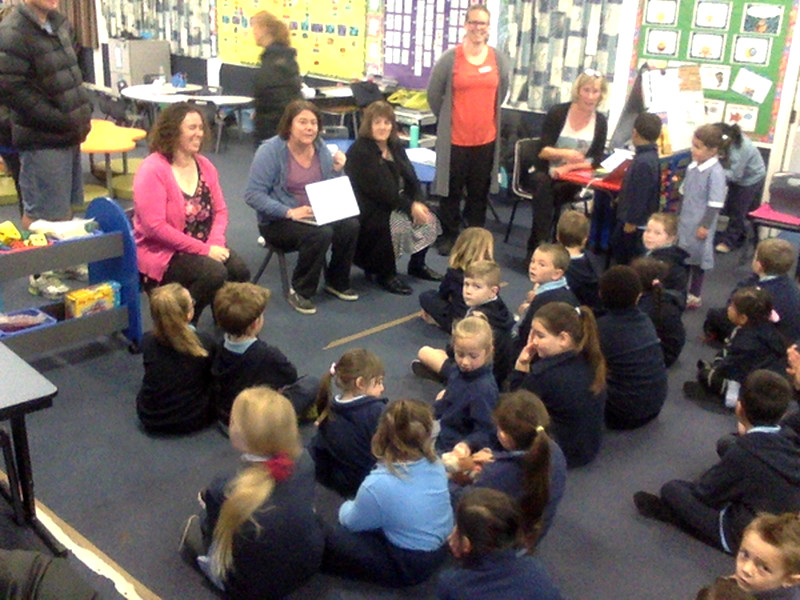
We are now teaching in two significant hubs, being junior and senior.  With the move of the Years 0-3 students being moved to the open space within the hall, the senior school teachers have felt the need to understand what is happening within the junior hub and gain some understanding of programmes and structures in place.  

We see this as being important so we know what students have been learning and can make connections for when they come to the senior hub.  It is also good to have consistency across the school and will help develop our learning programmes.

For all of us, this visit was very positive and informative.  We were able to see the beginning of the day routine, Numeracy and Writing.  We are intending to visit again in term 3 as three interns were teaching so we need to see how things are managed when just the four teachers present.  
Here are a few snippets from what we observed:

Jun 23, 2016 9:00:49 AM.jpg
Teachers situated in different parts of the room.  One child chosen for karakia.  One student says the first line and hub repeats.  Hub then sings waiata Ko Mātou.  Sounds so lovely.
Jun 23, 2016 9:16:12 AM.jpg
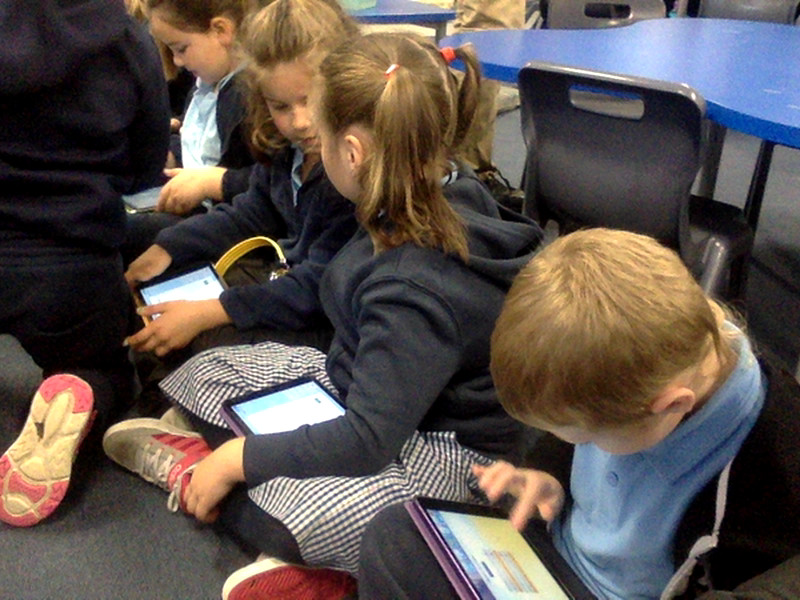
Children work independently one to one on iPads with Mathletics.  Children are still in the learning stage so are working out what to do with some activities.  Some swapped and asked each other for answers.  
Jun 23, 2016 9:14:00 AM.jpg
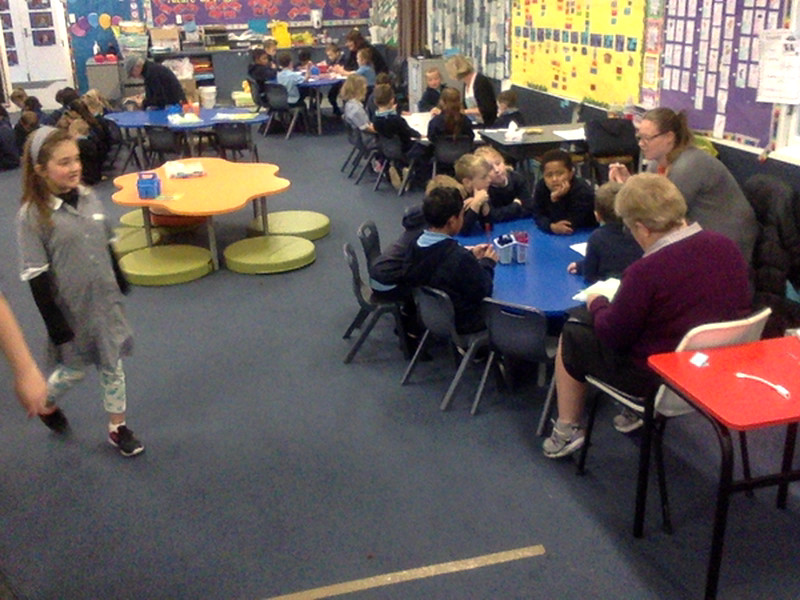
All instructional groups had a high level of engagement.  These are not currently indicative of how the hub normally operates as there are currently three extra people.  Average of 6 kids per group.  Follow up type work is done at the instructional group.

Actions stations are levelled at three different levels. Activities include:  Peg boards to develop fine motor skills and making patterns, missing number whiteboard sheets, forming numbers.  A buzzer goes and children move to their next station.  Some move to a mat area and then a teacher directs them where to go.  As they change fortnightly, as groups change and teacher role changes.
Some students working on the mat using text books.  Setting out of books is being put in place and some are neater than seniors.  This is deliberate in getting students ready for senior school expectations.

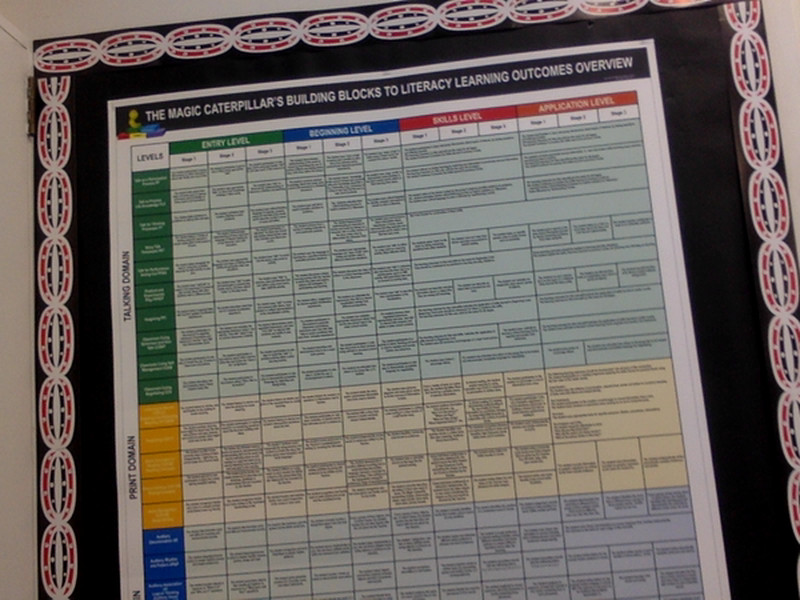
Building Blocks- This is significant for us as we are looking at implementing some aspects of this programme to help tend to needs of out senior school learners.
Jun 23, 2016 8:55:18 AM.jpg
A mammoth chart of skills needed to be curriculum ready.  Action stations are designed to develop these skills.  Domains are focussed on each term.  These include Talking, Print, Listening, Looking, Moving.

Where to next?
Our next step in understanding and working collaboratively across the school, will be for the junior teachers to visit the senior hub and for us to visit the juniors again and look specifically at how literacy is covered and organised.

Hornby Cluster

Hornby Cluster Schools Get Together


Today the Hornby Cluster Schools gathered at Hornby High to hear Pat Sneddon, the chairperson of Manaiakalani speak and share the story of the Manaiakalani journey.  
Brief explanation of what Manaiakalani is:
In 2007 our initial cluster of schools wanted to find a way to engage the children in our mostly Decile 1A community in their learning. Digital Learning proved to be the ‘hook’ to guide our whole community to better educational outcomes.
Some of the crowd ready to get into it.

Pat began with sharing how the Manaikalani Journey began and took us through to where it is now and where it is going.  He shared stories about the Tamaki area and how the need for liberation of the low income learner emerged. One concept from stories of the time was around Rangatiratanga, taking charge of your own circumstances.  The tangi of Te Arikinui Dame Te Ātairangikaahu led to thinking about how we can be as good at educating the living, as we are at burying the dead?

The Tamaki Transformation Programme which included  Glen Innes, Panmure and Pt England, identified that the infrastructure had many issues and the area had a number of things that were not right.  A group was put together made up of government, community groups etc. who looked at infrastructure and what was working well. 

In 2009, Principal of Pt England School and Manaiakalani Convenor Russel Burt, invited Pat to visit his school.  He was greeted by children who then told him about their learning. They shared about how they were beginning to learn digitally.  It seemed too good to be true as the learning taking place was astounding.

Some reasons for everybody not being involved at the time, included issues such as cost of retraining teachers from an analogue to a digital world and finance.  Pat's response was if I get it for you would you come?  He did, they came and here we are.

Pat shared this video from Russell Burt which looks at moving from subsistent living to capital building by design.   Move out of subsistence to capital building.  This is significant as this is part of the purpose and goal for Manaiakalani schools.

Stuart McNaughton and Wolf Fischer Research-significant research has and continues to take place within Manaiakalani and outreach cluster schools.  Click here to read research findings to date.

We are part of five clusters across the country.  These include schools in the West Coast, Papakura, Mt Roskill and Kaikohe. Thirty eight schools across New Zealand are currently on the journey to use digital technology to accelerate learning for their students.  

We need to know what we are trying to achieve with being part of this outreach.  
Collaboration across schools and boards is essential.  Some things that have been put in place such as wireless in homes, could not have been done without collectivity.  

Within this process, opportunities for creativity and collaboration are abundant.  Positive for teachers to be able to learn from each other.  Learning is visible.  

Initiatives to support and develop teacher capabilities:
*innovative teacher
*digital teacher academy  
This process is built on this structure:
Whanaungatanga-Relationships

Kaupapa-Purpose

Putea-Resources

Where to next?  Outreach+ is the outreach programme being made available to all New Zealand decile 1-2 schools.  Our performance as leaders and teachers counts.  We need to be able to prove the case that what we are doing is working and we are achieving our goals. 
Key focus: 
What happens to and for the learner?
We can't do this alone...so we collaborate.
Hornby Cluster Schools...a positive start and well into this new journey.

Saturday, 11 June 2016

Associate Teacher Workshop


Associate Teacher Workshop
8 June 2016
Sharon Feiman-Nemser
Degrees
Columbia University, Ed.D.
University of Chicago, M.A.
University of Michigan, B.A.
Expertise
Jewish education; curriculum and pedagogy in teacher education; learning to teach; mentoring and new teacher induction; professional development of teachers.

Last week, UC held a workshop for Associate and Mentor teachers.  It was a mix of people with the majority being from Early Childhood, some Primary and one or two Secondary.

Sharon started by sharing a story and Kathy and Debbie.  Kathy was the classroom teacher and Debbie was her student teacher.  Kathy was struggling with handing over her class to Debbie for a range of reasons.  From this discussion with Sharon, an inquiry which led to reinvent and reimagine student teaching took place.  The role of all involved was re thought.  Large-scale changes came about it in Michigan teacher education.

The problem with the system prior to this inquiry, was that it asked the most experienced teacher to step aside for the least experienced. Teachers had a certain mindset about what their role actually was.  We discussed where this perception comes from?
When thinking about Kathy's case prior and post inquiry, thinking about the role of an associate teacher or mentor looked like this:

Before:  Institution & own experiences and expectations. 

After:   Teach together, learn from each other, approach children together, have many conversations about the why.  Model and explain pedagogy.
Kathy's thinking turned from seeing the students as hers, to ours,  This led to a more collaborative relationship with the focus being on the children.

'All I see are the actions so I need to break these down and see what the thinking is around this is.'

Checking out ideas from within the group.
We need to learn how to talk about teaching in ways that are not judgmental.

We looked at the need to find more precise and descriptive language for when we discuss what we do.  Never assume people know why we are doing what we do when in the classroom.  
We listed ways we can do this:
OBSERVE RESPOND REVISIT BUILD AND MAINTAIN RELATIONSHIPS BE AWARE OF ALL CHILDREN AND THEIR NEEDS UNDERSTAND CURRENT TEACHING PEDAGOGY QUESTION BE DESCRIPTIVE CONSISTENCY BE VISIBLE BE PRESENT

Although this course was designed for associate and mentor teachers, I think there are elements and ideas that we can all benefit from and help to improve our own effectiveness and that of those around us.  
Lee-Anne, Sharon and Samantha...what a great sport stopping for a selfie.
Teaching is relational.