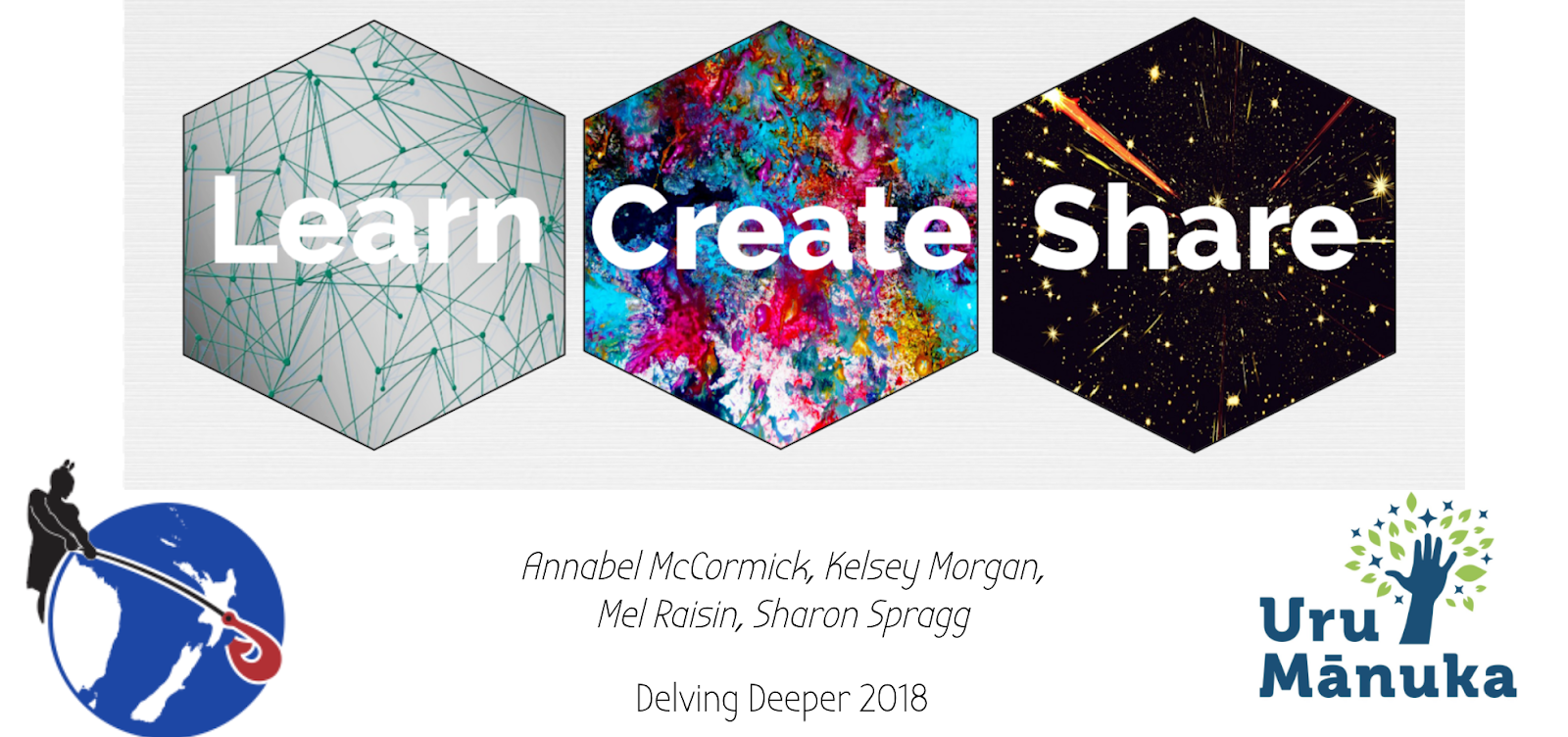
It was an absolute pleasure, on May 10th, to collaboratively present at Delving Deeper 3 with my fellow School Leaders: Annabel McCormick (Wigram School) and Sharon Spragg (Yaldhurst Model School) along with out Outreach Co-ordinator, Kelsey Morgan.
- Nature of the learning tasks
- Use of digital technology
- Feedback given
- Time spent on task
- Student Agency
- Collaboration
The message that we wanted to get across to the educators who came to our presentation was a combination of changing the perception of Hornby Schools and students, as well as giving a glimpse of how and what we do to engage the students.
We had anticipated that our target audience might be some of the schools who have just joined the Manaiakalani Outreach community. We couldn't have been further from the truth. Surprisingly, our audience was predominantly high decile country schools.
We began by introducing ourselves individually, explaining who we are, where we're from and our role within our schools. I was able to add to this by explaining my own unique journey, about rationale behind changing schools but staying within the cluster
Kelsey Morgan explained a bit of background into the Manaiakalani Outreach Programme, from our joining way back in the beginning, through our successes and insight gleaned along the way up until now. She elaborated on our connection with MET and Woolf Fisher Research, which includes researching the data as well as in class observations to provide evidence of what practise is likely to increase student achievement.
Specifically in class research looks at:
I spoke about Uru Manuka Cluster evolving, teachers being willing to share, resource banks, open about sharing, visible, connected, ubiquitous, empowered, shared mindset, coherence across the schools in the cluster:
I vividly remember a time, not so long ago... four yeas perhaps, where teachers still guarded resources and ideas like a prized family recipe. When hui's occurred with neighbouring schools, people clustered with their kura, perhaps sparing a chat with the odd familiar face.
Fast forward to now. Uru Manuka Cluster has evolved into a place where we openly mx at gatherings. We default towards sharing DLO's (Digital Learning Objects) and teacher created resources and banks to make them more readily available to the wider Manaiakalani Network.
The School Leaders and Principals work extremely hard to ensure there is a shared mindset and coherence across the schools in our cluster, while still maintaining autonomy for each kura.
Both groups meet regularly, working to a set agenda of goals, effectively in a think tank like manner.
Our learning is visible online, therefore rewindable. It is ubiquitous, allowing student access at anytime and anyplace. We are empowering our akonga through agency.
A number of initiatives have driven the way forward in information sharing. We began with toolkits - small tech how to sessions which teachers were expected to sign up to and attend. These were run by teachers from within the cluster. Often they spawned into fabulous sharing and discussion sessions where ideas bounced around the room.
Teachers would meet to collaborate, building upon ideas and began to develop relationships whereby they spread their network broader to be able to glean ideas from the wider cluster.
The growing connections haven't been limited to our teachers. Among the Uru Manuka initiatives undertaken in recent years, have been a student summit, where akonga from within our cluster led toolkits, teaching digital skills from promoting useful apps and extensions to learning how to use robotics. Year 7/8 students, with support from Sport Canterbury, organised and ran a Ki-o-rahi tournament. Teams consisted of year 5-8 students and it was a fabulous festival atmosphere. Another avenue to develop the relationships between our akonga.
Kelsey Morgan explained Learn Create Share from a Manaiakalani Perspective.
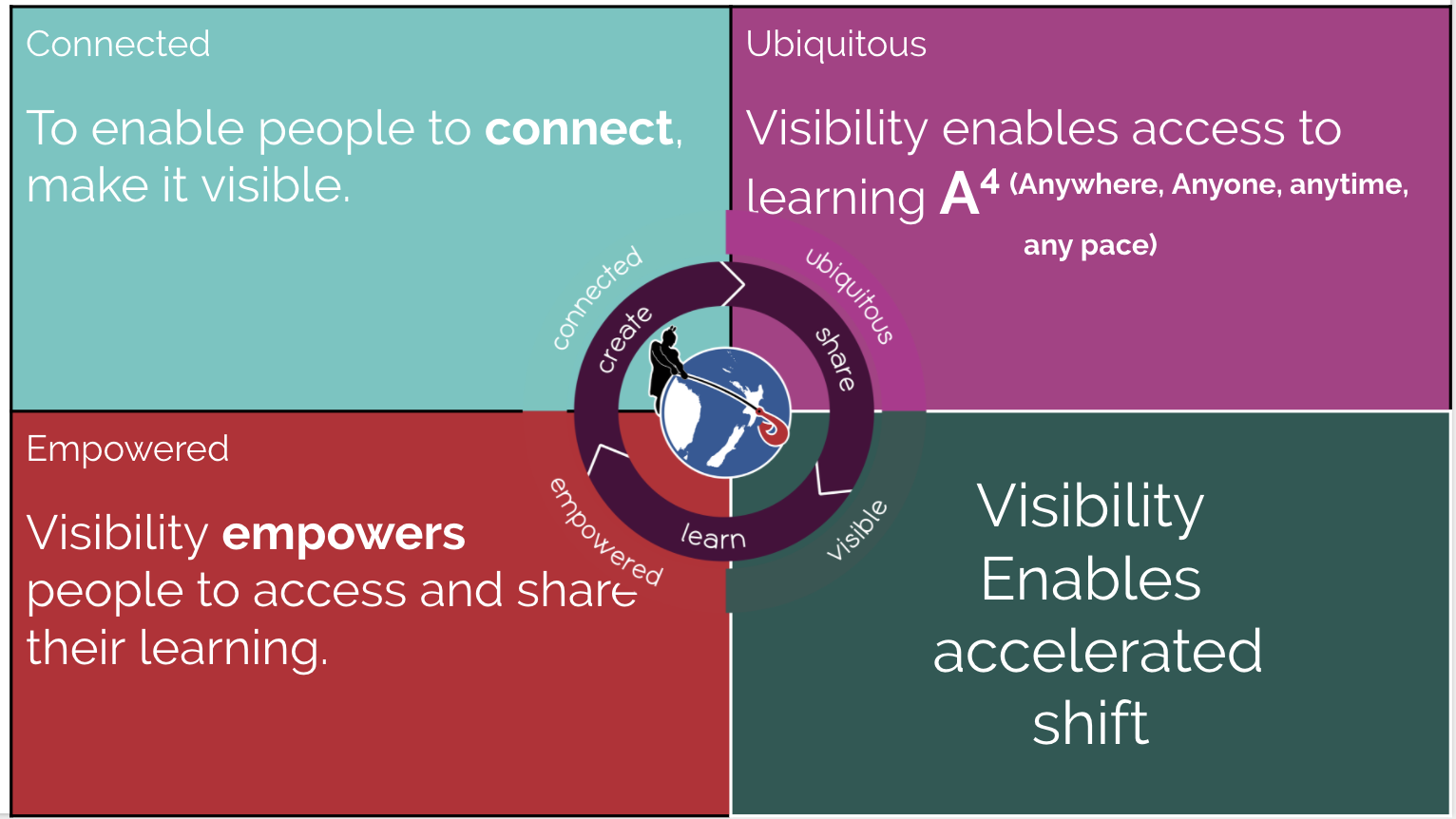 What it actually is, along with how it is used to support digital technology in classes through blogging.
Affordances of technology - engagement, cognitive challenge, scaffolding, visibility.
 I reiterated my SLAM, from the Uru Manuka Mini-conference at the beginning of the year.
Annabel shared her SLAM, from the Uru Manuka Cluster.
Sharon Spragg shared a glimpse of what a typical students day might look like. A student starts their day by checking out their class site for their work. Work is directed to areas, they read / watch and follow the instructions.I vividly remember a time, not so long ago... four yeas perhaps, where teachers still guarded resources and ideas like a prized family recipe. When hui's occurred with neighbouring schools, people clustered with their kura, perhaps sparing a chat with the odd familiar face.
Fast forward to now. Uru Manuka Cluster has evolved into a place where we openly mx at gatherings. We default towards sharing DLO's (Digital Learning Objects) and teacher created resources and banks to make them more readily available to the wider Manaiakalani Network.
The School Leaders and Principals work extremely hard to ensure there is a shared mindset and coherence across the schools in our cluster, while still maintaining autonomy for each kura.
Both groups meet regularly, working to a set agenda of goals, effectively in a think tank like manner.
Our learning is visible online, therefore rewindable. It is ubiquitous, allowing student access at anytime and anyplace. We are empowering our akonga through agency.
A number of initiatives have driven the way forward in information sharing. We began with toolkits - small tech how to sessions which teachers were expected to sign up to and attend. These were run by teachers from within the cluster. Often they spawned into fabulous sharing and discussion sessions where ideas bounced around the room.
Teachers would meet to collaborate, building upon ideas and began to develop relationships whereby they spread their network broader to be able to glean ideas from the wider cluster.
The growing connections haven't been limited to our teachers. Among the Uru Manuka initiatives undertaken in recent years, have been a student summit, where akonga from within our cluster led toolkits, teaching digital skills from promoting useful apps and extensions to learning how to use robotics. Year 7/8 students, with support from Sport Canterbury, organised and ran a Ki-o-rahi tournament. Teams consisted of year 5-8 students and it was a fabulous festival atmosphere. Another avenue to develop the relationships between our akonga.
Kelsey Morgan explained Learn Create Share from a Manaiakalani Perspective.
Affordances of technology - engagement, cognitive challenge, scaffolding, visibility.
Annabel shared her SLAM, from the Uru Manuka Cluster.
Teachers pull out groups and work with them - sometimes on a device and sometimes not.
The independent work is about collaboration, rewindable learning, engagement in whatever it is they are learning.
(Students that are high flyers - can fly high, those that have areas of struggle have the scaffolding that they need to be successful with their work.)
- Commenting on blogs
- Blog posts
- Learning
Links you may find useful:
Manaiakalani website - www.manaiakalani.org
“Creative skills help students become better problem solvers, communicators and collaborators.”
Everyone Can Create Apple 2018