Gilberthorpe school

Gilberthorpe school
Showing posts with label eLeaders. Show all posts

Thursday, 28 October 2021

Manaiakalani Wānanga 2021


It's a Manaiakalani Wānanga like never before. Usually, we are in Auckland, however today we find ourselves at the nearby Hornby Primary, in an online forum with people in an online call from all over the country.


Pat Sneddon - Manaiakalani Education Trust Chair 2011-2021

Led in with some data on the wider context of Hospital/ICU Admission statistics who are vaccinated or unvaccinated and the high levels of Māori & Pacifica comparative to Asian and European. High School children who are earning the income for their families while still trying to engage with their learning. It's a whole different world from what we perceive each day. Vaccination is happening at "the speed of trust" We are the trusted people they connect with. 

Research Recommendations - Dr Rebecca Jesson - WFRC; Georgie Hamilton & Kiri Kirkpatrick (Manaiakalani Research Team)

Evaluative Organisational Thinking to Build Effective Reading Pedagogies

  1. Interrogate evidence of strengths and needs
  2. Identify strategies likely to work, based on research evidence
  3. Close interrogation of implementation - so that strategies adjusted to learners’ strengths needs
  4. Refine and review

This is all work we already know from John Hattie.
Thinking about these prompts with a reading lens. These have been high Leverage Practices for the last couple of years now.

Questionnaires:

Our Structured Literacy conflicts with the design of the questionnaire by its very design.

Planning for Reading With Intent

  • Setting a goal or purpose and generating a series of actions
  • The ability to plan accounts for a significant portion of income gap in reading outcomes (Griffin & Friedman, 2007).
  • Good readers approach texts in goal-directed ways (Pressley & Lundeberg, 2008)
  • Goals interact with working memory. The type of goal you have affects what you remember (Mills, Diehl, Birkmire & Mou, 1995, Lindeholm 2006).Setting a goal means understanding why you are reading so that you can do things while you are reading to make sure your goal is met (Cartwright, 2015, p. 52)
When introducing a text, share purpose, learning intention and strategies. It can be as simple as three sentences. e.g:

“Today we are thinking about how the character develops in Chapter 4. We are learning how to notice how the words used to describe her thinking and feeling. Remember to slow down to notice when actions are impacting on that character.”

Text Selection to Build Knowledge

Up until recently, the selections were not chosen to build knowledge from one lesson to another. The units of study, five or six weekly lessons, were all too frequently a hodgepodge of selections organized under a vague theme, such as serendipity or adventures. Fortunately, the most recent versions of core programs present units of instruction with unified themes and selections that build knowledge over several lessons (LaVenia, 2019).


Link to Rebecca’s junior T-shaped presentation

Link to Literacy Exemplars website


Cultural Representation has shown an increase in Māori and Pasifika representation in text.

Mirrors, Windows and Glass Sliding Doors

To use books as mirrors of the diverse students we teach, we must make sure those books offer as accurate a reflection of them as possible. Identities are never comprised of single descriptors; a student’s identity is a rich mosaic of experiences, values, perspectives, and cultural ways of knowing, being, doing, and communicating. 

If we truly want to share books as mirrors, we need to take the time to know who students are, in as many ways as possible. And then we need to help our students find books that reflect those identities in as many ways as possible, too.


Enriquez, G. (2021). Foggy Mirrors, Tiny Windows, and Heavy Doors: Beyond Diverse Books toward Meaningful Literacy Instruction. Read Teach, 75( 1), 103– 106. https://doi-org.ezproxy.auckland.ac.nz/10.1002/trtr.2030

Teach Learners to Think and Question

Discussion

Extended Discussion is where there are akonga generated discussion which goes around the learner group rather than bouncing in and out from the teacher. It has huge I'm[pact on the learning and needs open ended questions to work effectively. It's been a HLP for at least 3 years, but still isn't clearly evident in the learning experiences.

Relatedly: Oracy video  https://www.youtube.com/watch?v=2ADAY9AQm54


From the research:

  • Discussion has an effect size of 0.82


Almarode, J., Hattie, J., Fisher, D., & Frey, N. (2021). Rebounding and reinvesting. Where the evidence points for accelerating learning. A GOLD paper. Thousand Oaks, CA: Corwin. white-paper-reinvesting-and-rebounding

Critical Literacy

“The goal of critical literacy is to help students focus on uncovering the perspectives and positions that underpin texts, and to ask and judge what these perspectives might mean in terms of the social construction of their world.”
Susan Sandretto. “Planting seeds.” 


Why choice?

We need to be able to transfer from one context to another in order to embed understanding more deeply. The table below explains the effect size that choice has. (Remembering that choice doesn't mean open season and a free-for-all.
There are more than half the observations missing a share component.

Share

The idea of having more than one opportunity to think about what you've learned and rehash the process. It improves working memory. The more times that we can recycle the learning, the more times we get to organise the learning chunks into higher-order patterning. All the research tells us that it is a lever for higher organised thinking.

Learn Create Share:

With an effect size of 1.33, or the potential to more than triple the rate of learning, developing the assessment-capability of our students will provide long-term benefit across multiple contexts and in the face of future challenges. This is the why behind our what.

Almarode, J., Hattie, J., Fisher, D., & Frey, N. (2021). Rebounding and reinvesting. Where the evidence points for accelerating learning. A GOLD paper. Thousand Oaks, CA: Corwin. white-paper-reinvesting-and-rebounding

When we are picking programmes, we need to be thinking about, How are our programmes helping our teachers to become experts in the subject?

Almarode, J., Hattie, J., Fisher, D., & Frey, N. (2021). Rebounding and reinvesting. Where the evidence points for accelerating learning. A GOLD paper. Thousand Oaks, CA: Corwin. white-paper-reinvesting-and-rebounding


Existing Resources and Support:

Links to Resources


Learning from each other - successful 2021 PLD


  • Cluster Teacher Only Days

  • Cluster PLGs

  • Cluster PLD

  • Cluster Staff meetings

  • T3 nationwide staff meeting

  • School leader meetings

  • Literacy leader meetings

  • Education tours (to visit other clusters)

Further Reading


  • Text analysis and finding evidence in text:

https://nmssa.otago.ac.nz/insights/INSIGHTS_English_Making_Meaning_2019.pdf

  • Multimodal text and critical literacy:

https://nmssa.otago.ac.nz/insights/INSIGHTS_English_Multimodal_2019.pdf

  • Oracy in the Classroom:

https://www.youtube.com/watch?v=2ADAY9AQm54


  • Disciplinary Literacy

          https://c3teachers.org/wp-content/uploads/2016/09/Shanahan_Shanahan.pdf

Manaiakalani Innovative Teachers 2021
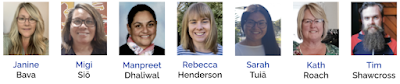

Janine Bava

Has created an inclusive education site with links to resources which will support learners with particular learning needs, or barriers, and a bank of resources to utilise to enable access to the curriculum.

Migi Siō

Supporting bilingual students who are reading more than two years behind their chronological age. Building vocabulary and word bank.

Manpreet Dhaliwal

Developing Critical Literacy Skills in Learners, through cultivating and facilitating Questioning. The site has information about Critical Literacy for both teachers and learners.


Rebecca Henderson and Sarah Tuiā

Matauranga Pāngarau. - A complete tool This site has Number Knowledge resources for Levels 1-4. (Currently Levels 2-4) The intent of this tool is for independent student use, but directed by the teacher. Please click on the photo below or the following link to check out our tool. 

Kath Roach

Kath has created a website that is meant to be a work in progress with new resources added constantly. She does not profess to be an expert of the Structured Literacy Approach but a teacher wanting to learn more. 


Tim Shawcross

Increasing literacy in a secondary music class context.

Device and Finance Procurement for 2022

The newer models include reinforced charge ports and more secure keys.
The price is great due to the increase in cost for all materials etc.

Looking ahead to 2022


We've been doing this for 6 years and counting now.
Increased sensemaking as ‘real-time’ data becomes available. Growing the team in Literacy support with Maths to follow

The Challenge/Provocation

Research Provocation by Dr Rebecca Jesson (WFRC)

Responding to the challenges:


So... What next?

  • Mote: voice notes & feedback - explore how this can be utilised for rewindable learning.
  • Push for DFI and Toolkits participants for 2022.
  • What opportunities for connection are there with schools such as St Francis os Assisi, in the Te Ara Tūhura cluster to best support our Structured Literacy Journey?
  • TAI v SMART Goal? - can we find a more effective "better" way?

Monday, 16 September 2019

DFI 9 - Beating Around The Bush

A weird feeling with this being the last day of our intensive. What will the next challenge be? It's been great having the opportunity to delve in deep and soak like a sponge. It's highlighted that I thrive on that and in many ways need it.

Ubiquitous

Leaping into the learning pit:

Today I leapt in and became the learner. We often put our kids in assessment conditions and flippantly assure them "not to worry", "it'll be fine", etc...
To leap into that position as adults, many of whom in the room were rather nervous about the daunting task ahead of them... was actually a really valuable reminder of how it feels. 
I had a few glitches while attempting the practice tests for modules on the certification site. Many of my problems were due to my nature of over-thinking. "Could it be that simple?" "Surely it's wanting more...?" Apparent;y it wasn't.

The Level One test was in two parts. One was multi-choice, with a scenario given and the number of answers which should be checked.

The other was actual tasks that we were required to go through, from creating a site with specific content to creating a YouTube playlist and sharing it with a specific audience. 

The daunting part was dealing with Google Classroom, which I haven't used before. I found it easy to complete the actual tasks within that domain, however, it was hard for me to answer the multi-choice questions because I couldn't relate it to my own tangible experience. How often does this happen with our students, particularly those stepping up into Year 4 and suddenly working in a digital learning environment?

All in all... I passed!

So Many Opportunities:

Manaiakalani Innovative Teachers

- Focused on your Inquiry. Throughout the process, you design a tool to be used to support this Inquiry. A fabulous think tank experience to help develop your inquiry process. Great opportunities from this as well as the extra support.

Google Class On Air.

Throughout the year, you put up 16 episodes of learning in your classroom as well as the work that akonga present from it.

Tuhi Mai Tuhi Atu

Buddy classes from throughout New Zealand. 

Online Toolkits

Term 4: October 22, 23, 24
Professional Learning, where you lead a toolkit in something that you are comfortable with sharing. It doesn't have to be absolutely amazing... just something.

Social Media

Keeping up with what's running already, such as professional blogs, Google + Community, Twitter etc.

What next?

The question of the day.
I've come to realise that I'm a creature that likes to be in the deep end and being challenged. I can't just paddle in the shallows. It has been invaluable being in such an intense learning environment for this past term. I need to keep the pressure on to keep learning.

  • Google Certified Teacher Level 2

    • I've committed to leaping in and giving this a go... what's the worst that can happen? I fail? (I'm forever telling the kids that it stands for First Attempt In Learning)

  • Hapara Champion Educator

    • I've submitted my application for this online course. The objective is to develop basic proficiency in the Hapara Suite—Highlights, Dashboard, and Workspace—from the point-of-view of a classroom teacher. Practice and reflect on positive, student-centred instructional use. While I've been using most of the features for years, I haven't been using workspace, so I'm interested in looking into this and how it can be harnessed for my practice.
  • Could we be doing mini-interviews for everything that happens at school... then putting up a mini news bulletin, a simple iMovie, that is uploaded to blogs and Facebook at the end of every week.

  • Next Year... there are a number of opportunities floating around. I need to "step into the arena".

Monday, 26 August 2019

Enabling Access to supe up sites

We explored how to maximise our class/subject sites to maximise visible teaching and learning.

Evaluating Class Sites:

We explored a selection of Class sites looking at the two key criteria of:

  • Visual appeal - shop window!
  • User experience - easy to locate ‘stuff’ (2/3 clicks)

considering what works well and what doesn't work well.

Colour checker - put a link to your site and it will analyse points to consider.

Visible Kaupapa

Making teaching and learning visible... essentially can you see it or not? We aren't necessarily talking about John Hattie's work as he takes it to a whole new level which becomes quite complicated. Manaiakalani simplifies this. It's visible not only to learners but to whanau too.

FAIL - so much of the learning journey has traditionally been hidden from the akonga. Dorothy likens it to an adult version of a maze where you can only see a little bit in front of you.

It used to be that those that succeeded were the ones able to read the teachers mind. Those who had an element of cultural capital. When success criteria are open and displayed it opens up the learning journey and makes it visibly accessible. We can take it a lot further still with the intentional use of digital tools. Every step of the journey should be visible.
When we say that the default is visible, what genuinely needs to be invisible or private?
Biodata (Date of birth etc), Health info, Behavioural data etc... sure, however what about assessment info? Five-year-olds know where they sit in relation to their peers. How precious do we need to be? We need to open our minds up about what genuinely must be kept private.

We've been using google sites to repurpose our learning since 1:1 classes began.
Making teaching visible removes the element of surprise for learners and whanau. It provides an advance warning as well as rewind ability afterwards.

Hapara's tagline is Making Teaching and Learning Visible. This is exactly what we are wanting to do. Effectively it enables us to be able to access the children's desk.
Hapara Parent Portal. DO our parents have the ability to access this?

Manaiakalani Google Class On Air

Stalk some teachers and see what it's like. At the end of this term, the applications for 2020 come online. Is this something we can get done down here? I'm seriously considering "stepping into the arena"

Visible Teaching as Inquiry

Having them open and visible across the clusters to access and learn from others, just like our learners. We stress the power of feedback and feedforward for our learners on their blogs. Do we do this ourselves with our own learning as professionals?


This connection only came about because they were visible online in a positive light for learning. A number of people argued that other communities were more impoverished/deserving, however, they didn't have a digital footprint.


Data shows that if a child is present over three years in a Manaiakalani School... the rate of gain in writing was twice that expected nationally. This means that these students on average made one more year's progress above the expected rate per year if they were there for three years.

A concern that when kids go digital, we lock parents out of our children's learning. Schools can create barrier systems to prevent ease of parents being able to find what they have been doing. By making everything visible and making it so that there is no problem with it being visible then we are keeping it open.

Leading Learning using a Google Site

An overview of setting up a class or subject site.
We need to consider the learners' pathways. It all needs to be connected so that kids find it easier to use when transitioning between classes and year levels.
When creating a new site... the first consideration is who are the learners? A site for Chromebook users is very different than a site that is for iPad users. Why are they using the site? What are the key things they are going to go to?

Think really carefully about Colour... you can you tools to pluck out colour from uniforms etc. Do the combinations make your eyes hurt? DO they look okay when viewed on different screens?

Consider Layout... how easy is it on your eye? There's a lot to be said for clutter-free.

It's important to think about using a consistent font. Try not to use more than two. This goes for the things that you are embedding too. Google has begun to include Lexend fonts, which are meant to increase productivity. You can see that they are rather boring though...

The 3 click rule is very important. You should be able to get to anything within 3 clicks.
Purposeful Learning Tasks:
We need to consider how we can ramp up the learning task to utilise the tools available. It's not always "What can we do better?" but how can we redefine the way we are doing things to make it more purposeful and authentic.

For ERO etc, it's very easy to copy sites, so even if you are going to use the same site, it's a good idea to make a copy of it so that it archives everything nicely.

Feedback on our Group Sites

We provided a link to our class site. We received down and dirty feedback. Well... that was the theory. Everyone was actually rather kind. To be fair, many in the room are only starting out with their class sites, so a few kinks were still being ironed out. Ours, on the other hand, are humming as they should be. One of the things that have been frustrating me about mine is the clutter of rewindable learning. I had developed a bad habit of just "dumping" DLO's at the bottom f the page. They were there and rewindable, but the shop window was in disarray! Certainly not providing a visually appealing visual appearance to engage learners.

My feedback from the group was too "nice":
"It looks great. Thanks for sharing Mel."
"Well done Mel. I liked your simple layout and it is easy for children to use."
"Looks great Mel. I like the cleanness and few steps the kids have to go to."
There was nothing I could use to set a goal for my class site for the day. I needed to come up with three specific things I wanted to achieve on my site today. My focus is on User engagement.

  • Cleaner pages 
    • rewindable learning is clearly marked as per term.
    • Less “busy-ness"
    • I need it to be more engaging (insert magic wand of inspiration here)
    • More “extra’s for expert” for kids to do at home.
I managed to clean a large portion up. It's much tidier and more user-friendly. I still need to be mindful of upping the engagement factor.

I finally got some links in there for literacy. I can just keep adding to this now... meaning kids have a place to go to when they are looking for "Homework" to do.

Sunshine Books:

Manaiakalani gets free copies of Sunshine books, to coincide with the online subscription. There are a huge wealth of resources out there to coincide with them.

Game changers:

Shift + Z - creates a ghost file in a different place.

100-word challenge: put a google form with a picture prompt in. You can then pull them off easily.
Google form: find me an interesting fact.

Monday, 19 August 2019

DFI #5 Devices

Today at DFI, our guest facilitator was Lenva, who works 4 days a week for Hapara and the other day for Manaiakalani.

We refer to Cybersmart rather than Cyber Safe to teach our kids how to live in the world rather than be scared in the world. We want our kids to know how to deal with things as they come up and how to keep their own footprint as clean as they can.
One of the most important aspects of the kaupapa is that it is visible. It's all transparent and open.

Smart Learners 

It's about being able to tackle different programmes and tackle different parts. Students learn the kawa of care, which is about teaching them to be responsible for their own device and who has access. It's crucial for the culture of looking after the tools for learning. Many assume that our learners know how to use the devices; however, they know how to use them in a different context. Often in a gaming "play/toy" context.

Smart Footprint. 

Term 2. The Create Term.
This is where our learners begin to be seen. What do they want people to know about you? How do you want people to see you?

Smart Relationships. 

Students interacting with the rest of the world. How do we speak on our (and others) blogs? If it's not positive, thoughtful or helpful then we are not going to say it. Authentic audiences and buddy class blogs encourage us to do this too.

Hapara - Making Learning Visible.

Hapara allows us to focus on teaching rather than technology. Hapara is not really about monitoring and filtering. It's about supporting the teaching. The focus browsing and Filter sessions are for those few individuals who need extra support.
Some key tools:
  • Sharing: All unshared documents, even those in folders.
  • All Docs: Every document created.
  • The only thing you cant see is empty trash, because who really does that?
  • Filter Session: The opposite to Focus session. You can identify the sites you don't want them to go to. 
  • Comments: Shows all comments made and received by that student.
Workspaces. It can be embedded into the class site. Units can be visible to some students and not others. You can control what they see. They submit it back to the teacher.

Tamaki College is currently undertaking all of their NCEA exams within a focus browsing session and students submit their work upon completion.

Chromebooks

It was all about finding the best device for learning for EVERY young person.
Partnership
  • Ownership of the Chromebook is a partnership. Often it becomes a family tool. Thus it is not only empowering students but whanau as well. They look after the device better if they own it, rather than when it's a school-owned device.
Participation
  • Bringing the device to school every day charged.
  • Because they are all using the same device, it empowers the teachers to work confidently with them.
Protection
  • It should be seamless. Everything should just happen and be visible.
  • The important things are behind the scenes.
  • By teaching a Cybersmart curriculum then we are assisting students to make good choices about what to do when things go awry.
Its a really good idea to go through the Digital Dig so that you know how to assist students with workflow.

Check it out here

iPads

Apple Classroom works similar to Hapara, but for iPads.
It's vital that the routines are established right at the beginning. If they are established young, then they have them for life.
Visible Teaching and Learning
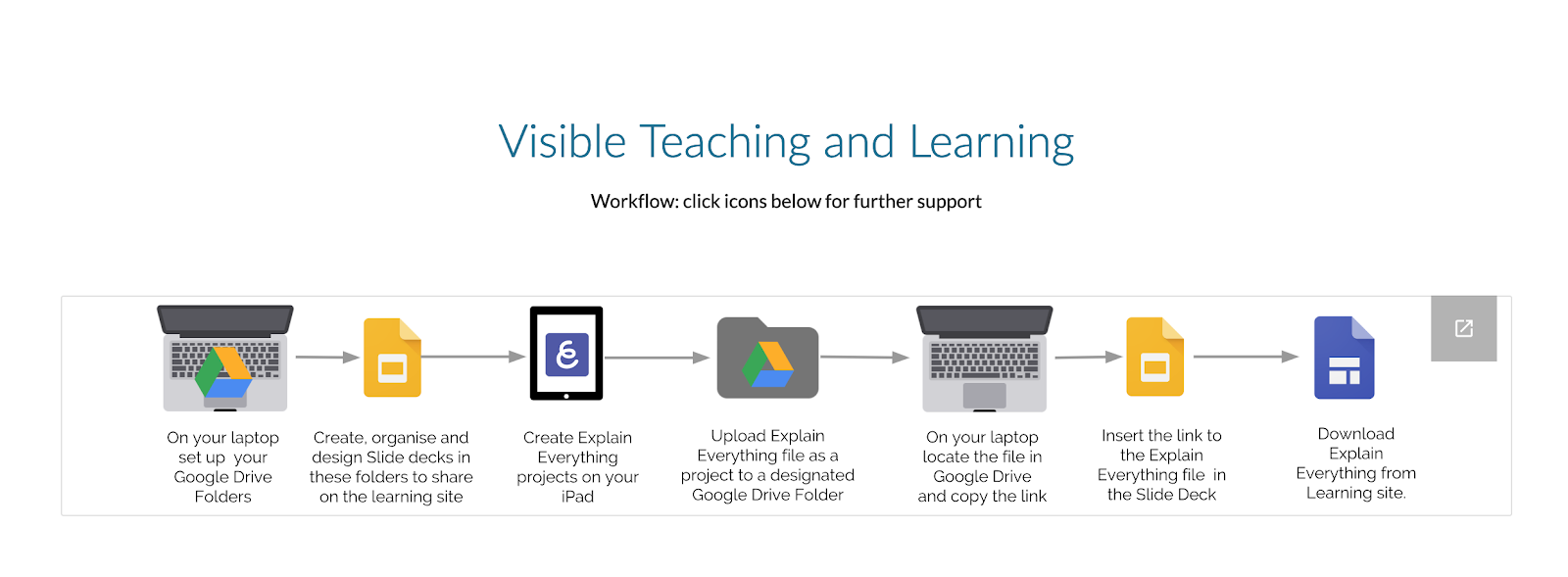
By embedding a link to your Explain Everything on a slide, you can put in easily on your slide.
To view on your Mac, download the Explain Everything Viewer (which sits in your Appa)

Screencastify

We created a Screencastify on how to use a tool. I took the opportunity to create one to share the differences between Onetab and Mini Toby, which we looked at a couple of weeks ago when covering Workflow. My learners use this easily and happily. As adults, I think we are often hesitant to record ourselves. There are so many uses for this tool.

Tuesday, 13 August 2019

Computational Thinking

Share - Tohatoha

We need to mindful that it's not just the great things that we share, but the reality too. Some times our perceived failures are the things that we learn most from. Sharing is what makes us human. Sharing our successes. Sharing our failures. F.A.I.L = First Attempt In Learning.

Youtube was born in April 2005. Social media spaces sprang up... Facebook... Bebo... Twitter... The taglines that they all chose to put with each space was "share your life" in some way shape or form. It opened up the world and the way that we share. 2005 brought speed and amplification to the way that we share.

Remind ourselves of our Manaiakalani goals. "Work with learners to establish an authentic audience for their learning outcomes." - Raise Achievement outcomes.


Authentic audience... gone are the days of the audience being a teacher at night with a red pen in hand. Natasha from Hornby High is a student who blogged about Vans. She sent the post to Vans and they commented! She made an authentic connection!

This connectivity is within the realms of every individual who has access to the internet. We need to utilise it to excite and accelerate our learning. Our kids are often limited in the connections that they make in person. Some often don't go many places beyond home and school. This is their vehicle out!

Blogger

Blogger was chosen for a number of reasons. In the beginning, a number of options were explored. Blogger won hands down.

  • Resembles the spaces our young people want to be on: While it may not be the coolest place that young people want to be, it functions very well to do all the things it needs to do.
  • Able to provision this legally, systematically & securely. The board of Trustees is the legal owner of the student blog. The student is merely the author. This gets around the age constraints and legalities of the blog.
  • NO new sign in required for GSuite users... no new list of usernames and password.
  • Guarantee that there's a three check system. These are mechanisms for us managing the safety of our children online.
    1. Blog posts and comments go to Hapara Teacher Dashboard for teachers to check.
    2. The teacher who is responsible for that blog gets emails to notify them.
    3. Gadget on the side of the class blog, that lists the class blogs. Make the setting so that the most recent post goes on top.

Cybersmart Curriculum

It's okay for students to be operating online, but they MUST be taught the cybersmart curriculum in order to ensure that they have a positive presence online. Providing an ability to connect with each other in a respectful way.

A lot of the other spaces are great. The benefit of Blogger is that it's within the google suite, so no further password or sign in is required. 

Share to finish learning

An eternal frustration, particularly in lower decile schools. It can encourage akonga to celebrate being "finished". They just move from one job to the other and then move onto the next without finishing one off properly. This can be a lifelong habit which transfers into their work habits post-school.
The process of 'Share to Learn' becoming a spiral is extremely important. Not only sharing to finish, but sharing to begin learning.
(Slide 18) "Positive thoughtful Helpful" - links to John Hattie and Feedback & Feedforward.
By embedding this language all the way through, it cements it and becomes a natural way of being. By embedding this it gives our kids a toolkit of how to behave, both online and offline.
We need to teach our kids some tricks to hook in their audience. You can't just be passive about sitting back and waiting for it all to happen.

Even reading and commenting on each other's blog has the ability to accelerate learning.
Every lingerer on a blog registers with googles algorithm. If you linger, it'll be noticed.

Kawana - OMGTech - He's the Course creator in the background.

Pam Fergusson Charitable Trust. She was a paraplegic who mortgaged her house to buy a computer because she saw that was the future. Her boys now are all computer programmers and run a multi-million dollar company.

Technology in the world we live in. It's about connections and who you know. Our kids need to have the ability to make connections.

Boston Dynamics Big Dog - ethics... it was funded by the military. It isn't just for war, but for rescues etc

Sophia the robot - Singing with Jimmy Fallon.

The algorithm adjusts within the song to match pitch. It has learned by itself. Sophia absorbed the knowledge. Can robotics be creative?

Skin Vision - $80/year. Consumer Institute wasn't positive about it, however, the more people who use it the better the algorithm gets. Getting a body scan for moles is around $200... Could become a new party trick?

Cost becomes a barrier.

Zephyr's Cora - Self-flying planes. 

Tech ethics...should we do it?

The new content covers two key areas, computational thinking and designing and developing digital outcomes. It has been designed to be flexible, so it can respond to new developments and technologies as they emerge.

In fact, when Hon Nikki Kaye announced the curriculum in June 2017, she said:
“Computational thinking is about understanding the computer science principles that underlie all digital technologies and learning how to develop instructions, such as programming, to control these technologies. 
Designing and developing digital outcomes is about understanding that digital systems and applications are created for humans by humans, and developing knowledge and skills in using different digital technologies to create digital content across a range of digital media. This part of the curriculum also includes learning about the electronic components and techniques used to design digital devices."

  • Inquiry & Communication is the use
  • Construction & Expression is the programming and create

Check out the glossary here.

Other stuff:


  • cs unplugged - a huge resource of unplugged resources.
  • Hour of Code. Limit to one hour or kids disconnect and check out
  • Toxicode and silently teacher: when they've moved on from hour of code.

Scratch


Kiatakatu.ac.nz

Digital Readiness - It’s worth having a look at. You can complete a self-review, to guage where you are at with implementing the new digital curriculum. It has great resources for you to upskill or be informed.
I completed the online self-review tool to see where I was at, as a leader.


Makey Makeys 

Image result for cardboard robot, adafruit


A-MA-ZING! Today was fantastic! I now feel like I've had a range of tools and ideas unleashed, but I've been able to have the sandpit time with them to successfully take them back into the classroom. I can see where a range of what we did today should be introduced to our akonga! It also involves critical literacy in that we are challenging our learners to consider the ethics of G-Tech and where things are heading, rather than being passive consumers of things that they are told about or introduced to.

I've already been on AliExpress and purchased a 3D pen, with filament! 

Wednesday, 7 August 2019

DFI #2

(Apologies... posts are out of order!)

Google Hangouts v Google Meet. 

Hangout effectively means that you can share your screen with the others in the group, whereas Meet is just video.

Etiquette

Noise within the group. Muting your microphone is crucial! The screen changes according to who is making noise... so if you are a foot-tapper or fidgeter (I am!!!) this could be quite disruptive and frustrating for the other members of your group.
Headphones reduce the amount of feedback so sound quality is better with them. I quickly realised that I need headphones for my laptop! - My iPhone ones arent compatible! If using a laptop and phone, there is a delay between you talking and hearing.

Manaiakalani Pedagogy - Ako.

Effective teaching. Accelerated Learning.

Our DFI Goals:

3. Our teachers are supported to understand how digital technologies used effectively can have a significant impact on accelerating achievement outcomes.

4. Our teachers are supported to understand how the Manaiakalani pedagogy and kaupapa has been co-constructed over more than a decade to maximise the impact of effective teaching and learning in a digital learning environment.

It's all about Increasing teacher effectiveness and accelerating learning outcomes in this digital environment. Supporting teachers to move from analogue to digital.


We need to be recognising the amazing things happening in our Kura and Amplify its impact by sharing it out. 
Turbocharge - doing things that have never been done before.

Challenge: What teacher actions are promoting student learning?

What does LEARN (effective practice) look like in my school? (Recognise Effective Practice).


What are the programs in our school that make learning happen? 
Great teaching + digital affordances =acceleration.

I'm reminded that I need to be more conscious when designing my reading experience, that I need to be including more text for general consumption.

I've been touching on the SAMR model (Dr Ruben Puentedura), for a number of years now. I really liked this link into Blooms, as I'm mindful that a number of teachers still refer to Blooms. 


Manaiakalani Google Class On Air

Teachers have webcams in their classes and are capturing learning online. You can look at them and see effective practice in action.

Google Keep

Found on the sidebar of Slides, Gmail, Calendar, etc is Google Keep. Another game changer! Even more fantastic... having it connected on your phone. With your phone, you can add voice notes. You can also take a photo of text, open it in Google keep, click the 3 dots... grab text and HELLO... it types it for you! Think about handouts in meetings/conferences... School Journals... so many different uses.

Gmail

We learned about a number of features to create a better workflow with your Gmail.
- undo send! You can change your settings so that you can retrieve a sent email within up to 30 seconds.
- Smart Compose (Tab to enter... on phone just tap at the end of the sentence.)
- Nudges... keeps me on my toes.
- Smart Reply - Great for responding quickly to acknowledge that you've seen it.
- Stars - I was running just a yellow star. Now I've got "All-Stars"... game changer!!! I can have different colours as well as a few different buttons. I'm using these to quickly sift emails I need to go back and action etc.
Keyboard shortcuts...
- G+T = Sent box
- G+V= Moved to
- G+S + Starred

We also created Labels to tame the inbox. We do it for our Google Drive, so it makes sense that we would our Gmail too.

Calendar

W discovered a number of previously unknown Shortcuts:

D - Day view
A - Agenda
W - Week view
x  - 4 weeks
in month view - J = previous, K =  next month

Create "Appointment Slots" - set the timeframes and then send it out. This would be fantastic for inviting people to make a suitable time for professional discussions etc.

Controlling Tabs

One Tab 

- Great for taming tabs!!! Clears them from all being tabbed. I for one am terrible qat running a ridiculous number of tabs on a number of windows... potentially even multiple personalities!
- Great to "lock" the list so that they stay there. Can get rid of the work tabs, without actually getting rid ot them.

Toby - mini

Collects them under collections. Easy grouping when running a lot of tabs at once. More visual than just the tabs at the top. I am loving this one! I can group my tabs according to "Planning", "School Leader" stuff and just having a play in general.

Other Handy Tools:

Colour picker
Colour Zimmer

Extensity Extension... to turn extensions on/off when not being used.

QuickTime Player

Today was my first time using QuickTime Player to record our groups' discussion. It served as a great reminder of what it's like to be in the sandpit getting stuck! I had thought that the first member of our group was silent... perhaps muted... alas no. I hadn't increased the sound for recording!
The next trick for young players arose when the sound feedback was becoming phenomenal. We need to be very mindful of where our microphone is located in relation to our device. One example was with the earbuds. Wearing one, with the other dangling, caused huge feedback. Also, the microphone being too close while holding up the laptop.

Please don't be brutal with our recording... It was the first time for all!!!