Gilberthorpe school

Gilberthorpe school

Friday, 2 November 2018

Manaiakalani  & Outreach Principals Wananga 2018


1 Whiringa a Rangi Panmure Yacht & Boating Club

Lee-Anne Waho
Screen Shot 2017-10-09 at 3.41.09 PM.png
In week 3 of term 4, Mel, Andrew and I headed to Auckland for a Manaiakalani Outreach day.  To be honest I wasn't overly excited about going but actually came away feeling inspired, amazed and also a little bit daunted and extremely reflective of my own practice and what and how I do things.  
The people who shared their Innovative Teacher work were all amazing and I found the mahi they have been doing to be quite jaw dropping and impressive.  There are many things for me to explore further and different areas I want to look into more closely.  
These are notes written for me rather than an audience but there will be a taste of some of the great work Manaiakalani are doing.

Russell Burt-We are here as whānau to support our tamariki being focused on rangatiratanga.  Equity, Equality and Liberation.  


Pat Sneddon-Spoke about us all supporting each other and encouraging others to 

Aaron Wilson- When we are looking at data we focus in on details but also need to view from afar to get a look at the big picture.  When looking at data closely, we don't always see the broader patterns.  Learners must always be at the centre of these inquiries.  
Aims: is to work together to build capability, maximise the group size, 
Today was a zoom out and our job is to take the big patterns and zoom back in at cluster level, school level and class level. 
Graphs and data was shared and explained. Link to copy of slide shared.

Teacher Questionnaire Feedback~Looking at two questionnaire that have been done.  Looking at relationships between learner and teacher questionnaire.  Common theme is around whanau connection is not as evident as it could be.  


Implementation Leaders Questionnaire~66 leaders from 45 schools.  

Roving was quite high on the graph.  Discussion around why teachers rove, the purpose of this and how we might give this a nudge.  Critical thinking scored quite low.  Not much commenting on blogs was observed however this is likely to be because teachers knew they were being observed.  Very little collaboration was seen.  Incidental conversations happened rather than deliberate opportunities.  What does collaboration look like compared to co operation.Using student writing as a model was seen.  Would be good to see more wider world, global texts for students to explore rather than just texts designed for students.
Four types of feedback looked at during observations:  Evaluative Descriptive Generative Online

Manaiakalani Innovative Teacher Presentations #1

Clarelle Carruthers Pt England Language Acquisition in Mathematics


Heather Matthews Hornby Primary School Unpacking a Key Competency
A book collaborated and created by heather and the tamariki in her bilingual class. Children are able to reflect on this competency as they shared a journey in creating to learn.


Hinerau Anderson Tamaki College Visible Teaching and Learning Site
Development of Visible Teaching and Learning site to use rewindable learning tools for students at Tamaki College.


Caroline from Noel Leeming~
Introduced to a portal designed to make procurement of devices for schools easier. Pathway A and B as far as financing goes.

Zac Moran Pt England School~Engaging Boys in Writing Movie Making
Link to Zac's Class OnAir site This is impressive. I have had a quick look at these Class OnAir sites previously but got a bit lost. I am really impressed with the mahi Zac is doing here. This makes me see how basic our learning site and our planning is.

Kariene Gardiner Ohaeawai School Recognising What Makes Effective Acceleration of Priority Learners in Writing
I like the Enhancing Writing Framework that identifies where teachers are at in rubric format. It covers pedagogy, constant innovation etc. I like this a lot.


Jacob Wesley Intermediate AsTTle Student Website
This is a bit mind blowing and very impressive. Is in prototype stage but what an amazing resource. Not only is this an amazing learning tool for students, it is also amazing for students.


Dorothy Burt
I wish I had started taking notes at the start of Dorothy's presentation. I just had an inspiring moment as she spoke about creativity. With the help of teachers across the country, circle wedge visuals have been created and developed. She spoke about teaching strategies for way back still being valued.


Danni Stone Pt England Unlocking Literacy


Rebecca Spies Park Estate School Using Argumentation Boards to Enhance Critical Thinking and Accelerate Achievement in Literacy
A resource bank around argumentation.  (First time I have even heard of this).


WFRC
Provocation
The better you are at connecting with whanau, the more learning and progress takes place.
What do you want whanau to noticed and is it visible? How are you connecting with whanau?
How do children take their learning and use it in their future?  You have not learned to read if you can't read unfamiliar texts.  Mileage, mileage.
How does the learning design in our tasks, provoke empowerment.  
Given that we have said this a number of times, challenges work for some teachers, for some the change has not happened, so what is it that we can do better to support and challenge teachers?  How do we work so all are clear about what is involved in the challenges put down?

Cluster Convo
Future Focus:  Three things we will do.
  • Whanau engagement-Look at ways to increase it, blogs etc (50 parents from our cluster participated in parent questionnaire?.
  • Feedback, Critical Literacy, Extended Learning Conversations-
  • Observations-Lead teachers to do observations looking at different types of feedback etc.  
Manaiakalani and Outreach Programme Slide (This is a goodie).


Interesting:
  • One of the areas Woolf Fischer aim to increase is blog commenting. 
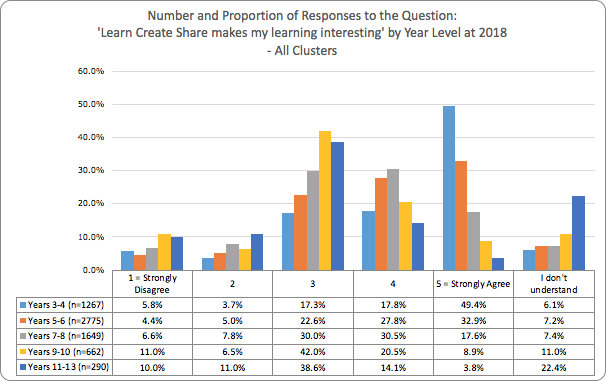
  • When asked about how Learn, Create, Share helps keep learning interesting, enthusiasm in Year 3 is quite high then sees a significant drop as kids head towards Year 13.

  • Cultural Connections with Learn, Create, Share.  Across the clusters, Maori and Pasifika students within Manaiakalani are happy, confident and see their cultures valued.  There is a slight mismatch between teacher and student perception.
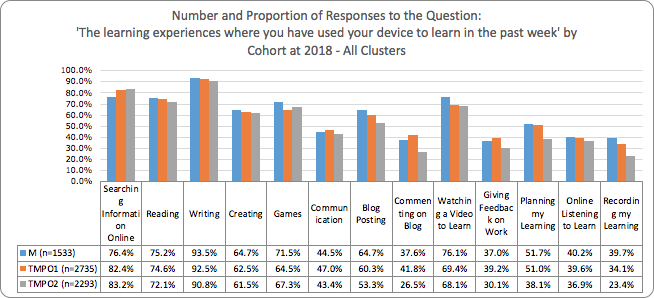
  • From this data is shows that across clusters we are posting on blogs more than commenting.
  • Throughout the teacher questionnaire, teachers often selected 3 as a score rather than being definite in their decision.  A scale to four rather than five could make teachers chose rather than selling selves short and going for the middle of the road.
  • Cybersmart programme needs to be embedded.  You would not send children out into the online world without having them educated in ways that keep them safe.

Monday, 29 October 2018

School Leaders Network

In term three 2018, Sam and I attended the School Leaders Network Un conference.  We had a selection of discussion topics and chose two to attend.  These sessions were hosted by one person who directed the discussion, starting off with a bit of their own story.  The rest of the group then shared and discussed what is happening in our own schools.

Reducing Anxiety in Children 

Hosted by Jo Johnstone
Jo shared some of her school's story and their work with Kathleen Liberty and her research into Post Traumatic Stress Disorder and reducing stress in Christchurch children, post earthquake.  
Key points discussed:
Some strategies are on a biological level, meaning for our bodies and others are ecological, which are to do with environment.

PLAY EAT LEARN~Children play first, come back in to class and eat together inside as a class in preparation to learn.  Children eat in social groups and manners etc are encouraged at the time.  

CARD BREAK~They also have a carb snack break at 9.30 in the morning because of the slow release energy carbs give.  Studies suggest children should eat every 90 minutes.

CALM DOWN DECOR~
Some children find too much stimulus within their environments, in particular things hanging across the room and too much on windows.  Natural light is good and clear spaces help reduce anxiety.

DRINK TO THINK~
Water and keeping hydrated has been found to help bodies respond to stimuli and keep in a calmer state.  Clear bottles are better than drinking fountains because the amount can be monitored and easy to see.

SLEEP ROUTINES~
This was touched on and some research has been done looking into sleep routines and the impact on behaviour and ability to cope with life.  Omega Oil was also discussed as being beneficial for sleep and general wellbeing.

We talked about staff wellbeing.  One school used RIRO to look into and support staff wellbeing.  I have had a quick look at the site and there is some good stuff for us teachers to take on board.

OTHER POINTS~
I shared about how we do Mindfulness and about diffusing essential oils in our learning space in Takitini.  Looking out for staff wellbeing has been important for us and being able to purchase and have access to essential oils and blends for health and wellbeing is a really positive path in the right direction.

NZ Principal's conference 2018

The NZ principal's conference is always a fantastic opportunity to pause, reflect, discuss and listen to many different educators from around the world.

The conference was opened by our current National president Whetu Cormick, who is always excellent to listen to.  The current environment within education is concerning but he remains confident that with the current Government , we have the right people to get positive outcomes for our students.

A quote that stood out above all others from Whetu was " Leadership is not about position, it is about action".  It made me also reflect on another cracking statement - would rather your child have a teacher who creates 30 experiences in a year for them or one with 30 years experience.

What I take from these is that anyone can lead, anyone can also be a fantastic teacher.  Neither time in the job or the position itself means much, unless this is backed up by positive action/s.  I am sure many of us can think of a  teacher in their early stages of their career who has done more within the school environment than someone with 20 years experience...   Action, not position or title.

We have a strong distributed leadership example at Gilberthorpe, where all staff are encouraged to take ownership and lead.  Not only does this allow leadership skills to develop but it also ensures great outcomes for students.

The Minister for Education, Chris Hipkins also spoke and certainly acknowledged how much can change in a year. Last year Whetu pleaded with Nikki Kaye to remove the National Standards, now they are long gone.  The Minister's key message was that we all want what is best for students, change is happening, it will not all happen overnight, or even within one term of governance but it is vital that we work together, truly collaborate to get this right. 1 in 5 graduates from Teachers college are not teaching the following year, mind blowing to think 80% of graduates are not working in the field they trained in.


In terms of the speakers, I loved listening to Dr Jason Fox who spoke twice.  He works as a motivational speaker and leadership advisor and has worked with many Fortune 500 companies including Coca-Cola, McDonald's, HP and many more. He was even once voted "Keynote speaker of the year".
www.drjasonfox.com

His opening showed the paradox with new learning and technology.  For example email was introduced to make life easier and save time when sending things to people.  What has happened though...?? we now use it more and more, taking up incredible amounts of time.  This emphasised how many times new things are introduced to save time/money etc but often have the opposite impact.

The message that really stuck out for me throughout the whole conference was when he spoke about "defaults".  We often go to these, at work and in our personal lives but default and quick fixes end up taking up 90% of our thinking. We are constantly at risk of being too busy and using these defaults, I could certainly relate to this. We must create time in our days to be creative, to truly reflect, in order to maximise growth.  Too many people think that curiosity and creativity look like time wasting and we worry about this far too much.
We follow a path of -  start up- growth-maturity-decline, new thinking and learning needs to be constantly added to the mix "only things in which can change, can continue"

He also spoke about goal setting and some some valuable messages.  Too often we are looking at a small, measurable outcome or goal, which pertains to one key area, there is so much other rich information in what we do each day.
"Goals should be treated like prescription medicine, not medicine over the counter" Obviously goals are needed and have their place but need to be used wisely and in conjunction with many other methods of gathering information.

A Harvard study looked at - What is it that motivates those to do great work? Recognition? Incentives and rewards? Clear goals and targets?  Clear sense of progress?  The results showed that it was a clear sense of progress that was the biggest factor.  Celebrate small wins!  92 emails down to 12 feels like you are winning :-)

Jason also illustrated something that we can all relate to... the feeling if you "leave early" or "don't stay as long as everyone else" A locksmith used to take 60 minutes to fit a new lock and was paid accordingly, now that times have changed and he can fix the lock in 20 minutes, should he be paid less?  Do we value effort more than actual value added?  Some people like to broadcast that they are working or appear to be doing long hours, these are signals that something is happening but is it always true? It creates a delusion of progress.  I still remember teachers leaving school the back way so that the principal didn't see them leave early, or staff staying late so that others thought that those who worked late, worked harder...  Again, can be a delusion of progress.  Time doesn't guarantee productivity.
I am sure many of us know that if we worked at home we would get more done, so why are so many married to this concept of "if you are at work till late you are doing more than others" This needs to be questioned even more in the digital era, given how many emails are being responded to after hours.

He referenced Jerry Seinfield being paid huge money to open a conference on "The secrets to success" He had a three word mantra... Do, The , Work!  Simple message but very effective.

He finished on Friday by challenging us to identify something personal or professional that we have not made the progress we want.  so, I have decided to go into "Beast mode" My challenge was losing weight, now that I have put it here, it has to happen.  I am going to create time and as Jason put it "Little rituals" can that support that process.  Watch this space.  If I put on weight, tell me to pull my head in! He also suggested that we need a project to aim towards, like a half marathon.  I haven't locked something in here yet but watch this space :-) Perhaps another boxing match, any takers?

Professor Peter O'Connor from the faculty of Education and Social work at Auckland university also spoke.  He specialises within the Arts and has worked with many students and teachers following both the Christchurch and Mexico earthquakes.

He emphasised that we need to wonder and wander, create moments of awe.  Research shows that students who are in "Art rich" schools perform better academically.  Partly due to a crowded curriculum and partly due to National standards, we have potentially placed too high a focus on Literacy and Numeracy at the expense of other curriculum areas, including The Arts.  John Dewey said that the Arts are the tool that train the imagination.  The Arts help in sadness and tragedy.
Thoughtful question- Do children do things that matter? and through doing it, do they learn that they also matter?
The Arts are disappearing, next year, there will not be a single music teacher in the primary sector of Auckland University, instruments are gathering dust... sad sad news.

Another great quote - "Schools are places where we learn to become fully human" I mulled over whether he was just referring to the students...

Sylvia Martinez addressed us next.  She  is the co-author of Invent to learn : Making , tinkering and engineering the classroom.
"Kids learn by being deeply involved in what they care about" We have heard this time and time again but what do we do to ensure this happens?  Do we ask students?  Do we plan for this in our programmes?
Empowered teachers leads to empowered learners, we need to feel like we are learning again.
The maker movement is upon us, it is not just about technology.  It is about making things, solving problems, owning solutions and sharing with others.

Joanne McEachen is the director for New Pedagogies for Deep Learning (NPDL)
She was passionate about measuring what is important.  Traditional measurement practices are one of the most significant barriers to learners success. Technology is providing huge opportunities but technology is not pedagogy, it is the accelerator.
This got me thinking about what we measure and why.  How do we measure the values or students?
When our students leave our school, what do we want them to be armed with?
The global team looks at learning outcomes based around- Character, Citizenship, Collaboration, Communication, Creativity and critical thinking.

"None of us are getting out alive, what we do, must count!"
"When I'm old, I don't want someone who can measure my weight, I want someone who can relate to me and give me a hug". #Keycomps

So what...  What action do I plan to take ?

  • Inspire others to cause action, forget position
  • Find time to be creative, unpack things, be strategic, avoid constantly working in default mode
  • Create healthy rituals for myself,  little things as often as possible, work on a project!
  • Measure what matters, starting with a frank discussion around what we assess and why.
  • Challenge myself and staff to ensure we have exciting , engaging learning contexts for all students, do we walk the talk?

A great week, catching up with colleagues, taking on board key messages and watching lovely humans dangle from the roof  (paid to do so) while eating our dinner :-)


Saturday, 23 June 2018

IYT Session 4


Session Four

June Term 2

Mel and I attended session 4 of our Incredible Years Teacher Training last week. We are slowly moving up the pyramid, and this in session we are beginning to look at the orange section, focusing on managing misbehaviour: ignoring and redirecting.
Incredible Years Pyramid
The session began with a brief discussion about behaviours in which we could ignore from student, vs behaviours that we could not. This generated a bit of heated discussion and it was interesting to hear different viewpoints about which behaviours could be ignored. Lots of us didn't agree, and we found that we each had quite different limits and expectations about acceptable behaviours.
Some of the behaviours that we could ignore were:
  • Students calling out
  • Standing up when supposed to be sitting on the mat
  • Whistling/Tapping
  • Off task and wandering around
  • Disruptions when in a group
On our "couldn't ignore" list, we found that there were a few overlaps:
  • Calling out
  • Tapping
  • Misuse of devices
  • Physical harm
  • Distracting others
  • Disrespect
Ignoring is when: teachers give no eye contact or attention to a student, give students privacy of a space to calm down, you remain calm in both voice tone and facial expressions, and you be consistent. The most important part of the ignoring process is that you re-engage with the student when the ignoring is over.

Ignoring is a skill that is not often taught so we modelled a lesson that we could teach to our students on how to ignore behaviour. Mel and I talked about how this would fit in well with the behaviour teaching that we are incorporating at the moment, as this is a key skill that our students so often need. We modelled the lesson using puppets, Y charts, brainstorming, talking about 'ignoring muscles', and we were also taught a breathing exercise to try with students. This will be an interesting one to test out and help slow the heart rate down to reduce impulsiveness. 

We were also shown a discipline hierarchy of steps for non disruptive and disruptive behaviour. We had to talk to teachers at other schools about their behaviour system and what they do. I found it interesting, having only worked at Gilberthorpe, that other school don't have one of these systems and that if a student misbehaves there are no clear steps or guidelines for a teacher to follow. 


Our school behaviour system fits into this model, and as we are in the process of adapting it this model could be quite helpful!

Another great session, over halfway through the course now and I would recommend it to any other teacher. I have learned many valuable strategies and ideas to implement into the classroom and my teaching and the food is pretty good too!


Tuesday, 5 June 2018

Presenting at Delving Deeper 3


It was an absolute pleasure, on May 10th, to collaboratively present at Delving Deeper 3 with my fellow School Leaders: Annabel McCormick (Wigram School) and Sharon Spragg (Yaldhurst Model School) along with out Outreach Co-ordinator, Kelsey Morgan.


The premise of our presentation was:
  • Nature of the learning tasks 
  • Use of digital technology 
  • Feedback given 
  • Time spent on task 
  • Student Agency 
  • Collaboration 


Using the pedagogical framework of Learn, Create, Share to support digital technology, leading to increased accelerated achievement. We have a strong connection to Auckland's Manaiakalani cluster as an outreach school. Learn tools and strategies that come from a research base and are proving to make difference.

The message that we wanted to get across to the educators who came to our presentation was a combination of changing the perception of Hornby Schools and students, as well as giving a glimpse of how and what we do to engage the students.

We had anticipated that our target audience might be some of the schools who have just joined the Manaiakalani Outreach community. We couldn't have been further from the truth. Surprisingly, our audience was predominantly high decile country schools.

We began by introducing ourselves individually, explaining who we are, where we're from and our role within our schools. I was able to add to this by explaining my own unique journey, about rationale behind changing schools but staying within the cluster

Kelsey Morgan explained a bit of background into the Manaiakalani Outreach Programme, from our joining way back in the beginning, through our successes and insight gleaned along the way up until now. She elaborated on our connection with MET and Woolf Fisher Research, which includes researching the data as well as in class observations to provide evidence of what practise is likely to increase student achievement. 
Specifically in class research looks at: 
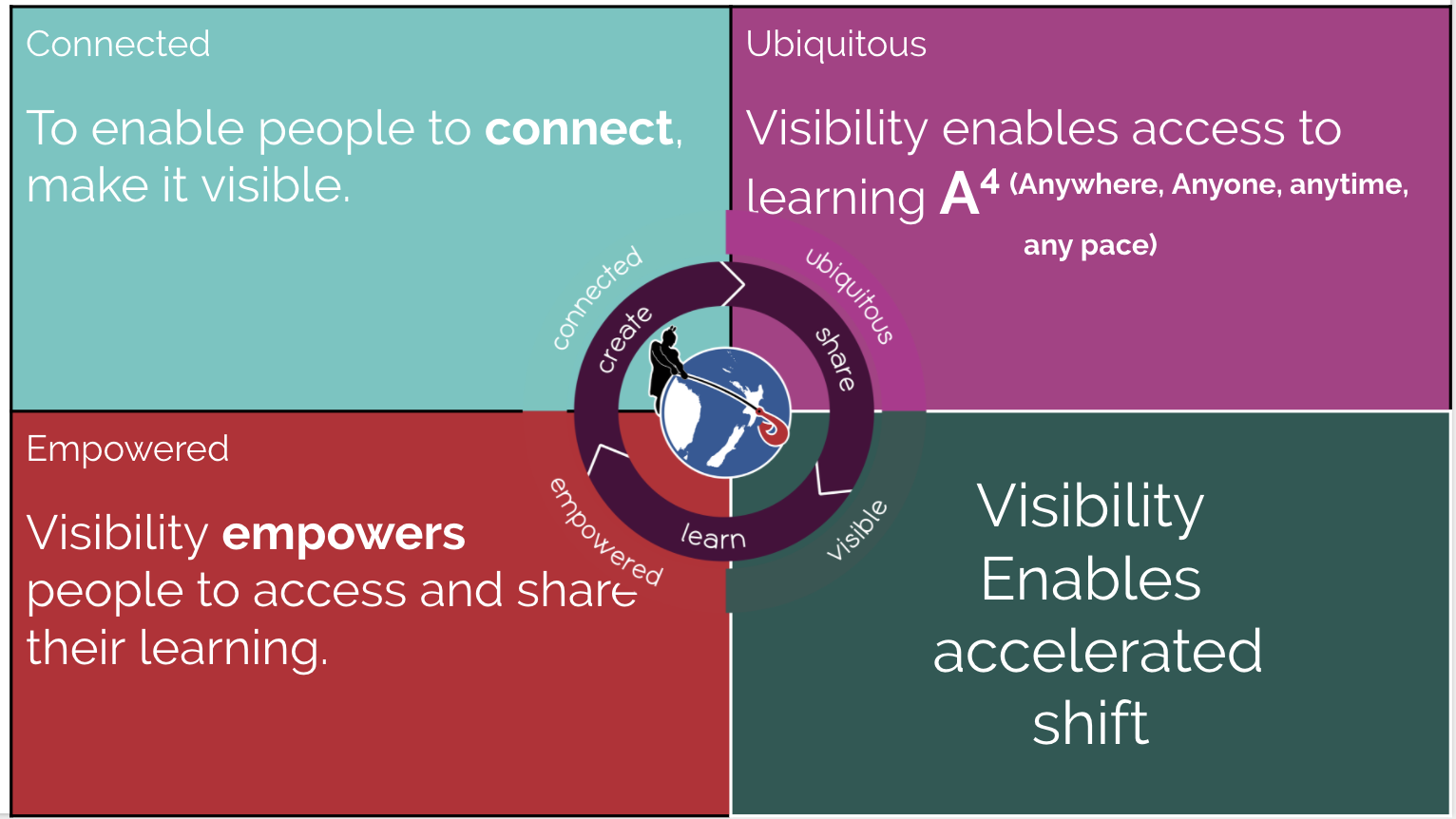
I spoke about Uru Manuka Cluster evolving, teachers being willing to share, resource banks, open about sharing, visible, connected, ubiquitous, empowered, shared mindset, coherence across the schools in the cluster:

I vividly remember a time, not so long ago... four yeas perhaps, where teachers still guarded resources and ideas like a prized family recipe. When hui's occurred with neighbouring schools, people clustered with their kura, perhaps sparing a chat with the odd familiar face.
Fast forward to now. Uru Manuka Cluster has evolved into a place where we openly mx at gatherings. We default towards sharing DLO's (Digital Learning Objects) and teacher created resources and banks to make them more readily available to the wider Manaiakalani Network.
The School Leaders and Principals work extremely hard to ensure there is a shared mindset and coherence across the schools in our cluster, while still maintaining autonomy for each kura.
Both groups meet regularly, working to a set agenda of goals, effectively in a think tank like manner.
Our learning is visible online, therefore rewindable. It is ubiquitous, allowing student access at anytime and anyplace. We are empowering our akonga through agency.
A number of initiatives have driven the way forward in information sharing. We began with toolkits - small tech how to sessions which teachers were expected to sign up to and attend. These were run by teachers from within the cluster. Often they spawned into fabulous sharing and discussion sessions where ideas bounced around the room.
Teachers would meet to collaborate, building upon ideas and began to develop relationships whereby they spread their network broader to be able to glean ideas from the wider cluster.
The growing connections haven't been limited to our teachers. Among the Uru Manuka initiatives undertaken in recent years, have been a student summit, where akonga from within our cluster led toolkits, teaching digital skills from promoting useful apps and extensions to learning how to use robotics. Year 7/8 students, with support from Sport Canterbury, organised and ran a Ki-o-rahi tournament. Teams consisted of year 5-8 students and it was a fabulous festival atmosphere. Another avenue to develop the relationships between our akonga.

Kelsey Morgan explained Learn Create Share from a Manaiakalani Perspective.
What it actually is, along with how it is used to support digital technology in classes through blogging.
Affordances of technology - engagement, cognitive challenge, scaffolding, visibility.
I reiterated my SLAM, from the Uru Manuka Mini-conference at the beginning of the year.

Annabel shared her SLAM, from the Uru Manuka Cluster.

Sharon Spragg shared a glimpse of what a typical students day might look like. A student starts their day by checking out their class site for their work. Work is directed to areas, they read / watch and follow the instructions.

Teachers pull out groups and work with them - sometimes on a device and sometimes not.
The independent work is about collaboration, rewindable learning, engagement in whatever it is they are learning.
(Students that are high flyers - can fly high, those that have areas of struggle have the scaffolding that they need to be successful with their work.)
  • Commenting on blogs
  • Blog posts
  • Learning
Links you may find useful:

Uru Mānuka website - www.urumanuka.org.nz
Manaiakalani website - www.manaiakalani.org


“Creative skills help students become better problem solvers, communicators and collaborators.”
Everyone Can Create Apple 2018

Tuesday, 22 May 2018

Delving Deeper Keynote speaker - Eruera Tarena

Image result for Eruera Tarena
The day began with an inspirational keynote presentation from Eruera Tarena, titled:
"Wayfinding Maori Futures: jumping on the waka to a brighter future."
Here's a few key things that struck a chord with me:

The pace of change is increasing and as a society we have a lessening amount of control over being pre-organisation for things. As individuals, we need to get used to being in a state of being without control over what is happening. This is a huge challenge for us as educators, where we like to preplan and know exactly where we are headed and anticipate what we may need to head off.

Maori traditions always have layers of meaning. - I'd never really considered this, but if you take a moment to think about many of the legends and myths, they are often adapted slightly to fit with the story they are telling at the time.
Maori success as Maori... it's a destination point. Early voyagers knew where they were going. Although they had never been to their destination, they used a term called "seeing the island", which meant imagining what that destination might look like in their minds. You won't see that destination until the last 10% of the journey, so it was important for Navigators to use "star points" or "way finding" to use as markers or indicators of progress along the journey. - The correlation for us, as educators, can be seen in our TAI's. We make a hypothesis as to what the destination point might look like... We then use data and anecdotal observations along the way as indicators of progress towards that.
Modelling equity and equity and equality for Maori. What happens if we continue to do the status quo? What happens if we do something different? - Even if the status quo is "working" it's our duty to be on the look out for ways to improve, both our practice and our achievement outcomes for our akonga. We need to reject the status quo. It's not good enough to continue to perpetuate them, morally etc

Things that require shifts in attitudes, values, the way we view the world

When we're thinking innovation, it's often about creating something to help us not have to change. We all like change until it happens... then we often find excuses to delay adopting it.

It seems ludicrous that we are still talking about cultural responsiveness 30 years on, rather than cultural sustainability. Gone is the time to respond. 

Te Waipounamu pipeline.

Equity is just being ordinary, the same as everyone else.
The Browner you are, the more likely you are to be replaced by a robot in future. Many young Maori are flatlining in terms of income in their early 20's.
Statistics are showing that they are more likely to be in unskilled jobs, due to leaving education earlier. Maori are always the last ones on and the first ones off in terms of opportunity.

The statistics of Maori students not completing university is extremely high. An audience member recounted a story of her daughters journey through university. One by one, her Maori peers dropped out. It became quite challenging and isolating to continue without that peer support, staying focused on the long term destination. It was a very emotional recount and resonated with all in the room.
What is the opportunity? And how do you frame that?" Moving beyond good intentions. There is an unconscious biased system as teachers. We all have a contribution to make.

We all like projects or programmes, but they only Create a bubble of change. We need to be thinking bigger picture and long term.
We inhabit that ship that's a shared future, with our treaty partnership. Our narrative has been driven by grievance loss and hardship, but we need to turn it around.
    • We need to come together; 
    • Change isn't 'out there' but 'in here'; 
    • Know what you bring to the table; 
    • identify your champions; 
    • be the change - join our collective.
What is the future together we want to inhabit.

More information on the data can be found at maorifutures.co.nz

Delving Deeper - 10 May 2018


Wayfinding Māori Futures


We began the day listening to Eruera Prendergast-Tarena. He spoke about the population growth of Māori compared to European people and how we need to support Māori more in the education system. 

He had some startling statistics to share with everyone. For every European baby born in New Zealand there is one Asian, one Pasifika and one Māori child born. Only 10% of Māori are graduating University. They are not going into higher qualification employment even if they do have a degree. Only 1% of Māori work in jobs that won't be replaced eventually by technology advancements. 

He drew attention to the fact that we are not preparing them for the reality of what jobs will be in the future. Their jobs will not produce enough income to support the growing ageing population of Europeans in retirement. Eru emphasised the need for change in our education system as it's not moral, socially or economically stable for us to maintain the status quo. Now is the time to make a difference while educational reform is on the table.

For more information he suggested visiting www.maorifutures.co.nz for more information.


West Rolleston School

Two teachers from West Rolleston School talked about their learning space and how they run their days.

They have five Year 1 & 2 studios (homerooms) in a hub of up to 75 learners. They call their homeclass a 'whanau group'. The new entrant class grows to 18 then a new teacher starts. The older class breaks off when the younger numbers grow. 

All students who are pre-enrolled come for a fish and chip dinner to meet everyone once a term. Toys and equipment are available to help them familiarise with the environment and teachers and support staff are there to answer any questions. 

When new entrants start school for their first visit they come for just the morning and their parent stays. They begin the day by going for a walk through all the areas of the school and meeting different staff. For the second visit they come for the morning without their parent. For the third visit they stay without a parent until 2pm.  

Within their learning space, the day starts altogether and they then move into writing in whānau groups. Reading is spread between the whānau groups while the other children do play based learning. 

All three teachers take groups and the kids self manage. Every 3-4 weeks the teachers switch around. Other teachers were quite critical of this, emphasising the importance of having a learning coach and the advantages of being present and doing the cognitive, emotional and behavioural coaching as outlined in IYT while the children are playing. 

Phonics is ability grouped and spread amongst the three teachers. 

Maths groups are spread across the hub. Each teacher starts with all the groups that they see on their whānau group mat where they do hotspots and then go into groups. The children have to stay in their maths spaces with activities specific for each group.

Handwriting is done in whānau group spaces. 

Other curriculum areas go for just 20 mins in the afternoon. Currently they have two teachers taking P.E and one taking Music. They do this for a whole week then move on to something else.

They have a big focus on Key Competencies within their play based environment and spend the afternoons just focusing on play for the first five weeks. Following that settling into school period, they then introduce curriculum areas. New entrants that arrive during the year do play in the afternoons while others are doing curriculum areas so that they get their five weeks of learning how to play within the school's guidelines and also to explore their surroundings.

The play based learning resources are put out before school and the children can choose and start before school if they wish. They use picnic mats to keep areas distinct for Lego etc. 

In their Discovery Room they have babies, a toy kitchen and a doll house. 

Makerspace days are an exciting once or twice a term event. They are based on current topics/times of year, for example the olden days. Kids choose and come and go from activities whenever they want all day. Because teachers are released to teach different games etc during this time, it is easy to then incorporate these into other times like reading. 

They recommended looking up Longworth Education for resources and tips for play based learning. Ngaire Shepherd-Wills from CORE also recommended looking at Northern Ireland pdfs for play based learning curriculum, key stage 1 online.


Learning Through Play


Tara O'Neill - Haeata Community Campus, Year 1-2. Tara also runs the 
NZ Learning Through Play Facebook group.


We discussed aspects of the quote that stood out for us. How would this approach help Māori children to succeed in their education and in life? It gives them the opportunity to bloom, safe settings for them to learn and their sense of identity (learner and cultural) is protected and safe.

Why is play engaging and how does it lead to deep learning?


Tara spoke about dispositional learning as the deepest kind of learning. Dispositional learning allows you to keep the Key Competencies at the forefront of the children's learning. Dispositional learning allows the teachers at Haeata to teach social and emotional skills as well as creativity through play. I loved hearing about how important dispositions are for their curriculum. We based all our Learning Stories (assessment) upon dispositions during my time teaching in ECE and they are such important life skills for the tamariki to learn and for the teacher to foster and capture for them. Tara spoke about the children having Learning Story books (what we used to call Profile Books in ECE), as well as all their stories being recorded on Linc-Ed. They use Learning Stories as their assessment right up to Year 13.


Their classroom is set up into different areas of play and the children can move around the environment freely. They change their provocations for play as the children's interests change, but they always have a quiet space, construction area, open area, art area and outdoor areas.

The role of the adult is to support the children in their interests. It is crucial for the adult to follow the children's path in their learning and not dictate what they should learn. Teachers observe and coach and also run workshops about things that they notice the children are showing an interest in. It is optional for the children to attend when the workshop is run, but they do as the teacher has carefully aimed it at their interests. For example the children might have created an imaginary restaurant, so the teacher runs a workshop on how to write a menu. The activity is always the vehicle for the learning to happen.

The early learners at Haeata are Pre-level 1 so the teachers implement the Te Whāriki curriculum instead of the Primary Curriculum. 


The left side of the diagram is unstructured, for example playtime and lunchtime. The right side is highly structured, for example traditional education with the teacher up the front. Tara aims to be in the green zone as she says it's the best way for the children to learn.


Tara then described a typical day at Haeata. It was quite controversial amongst the group of teachers attending the workshop and led to lots of discussion.

First thing in the morning the teachers meet and choose spaces that they will be in for the day. They advertise the workshops that are available and the kids opt in if they want to.

When the children arrive at school they sign in and play. At 9.45am they meet with their homeroom. The teachers have the same homeroom for three years. Homeroom time could be for social or emotional teaching, it could include self directed learning, values, feelings, self regulation, how to calm and different ways to do that. They then say their karakia and share kai.

During learning time they are free to go wherever they want in their learning space. The day is split into three 90 minute blocks. They all come together at midday for lunch and then do 15 minutes of phonics in their home rooms. They play again in the afternoon and meet with their homeroom at the end of the day to check in with each other.

Each child has three goals to work on in their personal learning plan. The first goal is always a dispositional goal and there are two other goals that could be a variety of options.

All children have access to reading books and writing books. They use these when they want to. Tara said that focused learning is happening consistently throughout the day.

The teacher has three roles during the day. 
1. Notice the learning - add in, take out, support learners with their play.
2. Meet kids on their own once a week to catch up with learners about their goals and how they are progressing on them. 
3. Take a workshop or activity with students.

There are no formal reading, writing or math lessons at Haeata. Other teachers at the workshop questioned about the possibility that students choose not to participate in reading or writing instruction for the full three years that they in the Junior area of the school. While Tara said that yes, that is a possibility, but it never happens as the children want to learn these things once they reach the phase of readiness to learn.

Every child has a box with books in and they read from them if they choose. Teachers focus on the culture of reading - not that kids are expected to participate in reading but that they want to read. 

Teachers always watch for readiness before expecting writing and language. This results in engagement before compliance. 

Haeata is really redefining the concept of school, especially for the tail end of learners.


Rolleston School Reggio Inspired Practices


Heather Mutu and Jade Bell spoke about the Reggio philosophy at Rolleston School. Although I already knew quite a lot about this, I was keen to have a look at their documentation and discuss their ideas for following children's leads in their learning. I would love to be able to teach in this way, it creates such deeper understandings and student ownership for learning than what an Inquiry process does.

Rolleston School uses an emergent curriculum. This means that they observe what the children are interested in, provide them with provocations and follow the children's interests in whatever way it takes them. For the first few weeks they have no planning beyond reading and maths as they give children lots of opportunity to explore and look for clues about what the children are interested in. 

They have the flexibility in their programmes to follow new learning for a day if a child mentions an interesting thing and they are not required to have to stick to a timetable.

Rolleston School began their Reggio approach many years ago when they encountered such difficulty involving Year 1 and Year 2s in the Inquiry process. The principal visited Reggio in Italy and came back inspired to implement their practices in New Zealand. A small selection of staff visit Reggio every few years to observe and learn more about their approaches to learning.

Their first step was to create a common knowledge amongst staff about documentation. All staff members do this a wee bit differently. Some keep huge art journals with photos and work samples as children begin to show an interest and then develop that interest. Some have photo albums made up with summaries. Some document the children's learning journeys all over their classroom walls and then photograph that when they move on to a new interest. Some have a blog or present their documentation in other electronic ways. They all record children's voice constantly to show their understandings and take photos of learning throughout the day.

They don't do unit plans, they instead use their documentation to record what they children have done. They take advantage of all learning opportunities instead of being defined by a specified curriculum of what to teach and when. ERO are very happy with their approach and they can easily link the children's learning to the curriculum if needed.

Teachers plan on the go, always after the session of learning to build upon what has happened in the last session. Teachers are always looking for how to pull the learning in different directions in order to expand it.

Heather spoke about how she uses her environment to stimulate discussion and provoke learning. She always has paints, drawing supplies, wire etc available to the children to allow them to show their learning using the 100 Languages. The children's interests may last a term, two terms, a year and some have even continued for more than two years. Heather has followed children's interests from them having different coloured eyes to each other, to dissecting a pig's eyeball, to then noticing the optic nerve coming out, to wondering about the brain, to dissecting the brain and learning about the different parts and it just went on and on with such amazing deep learning experiences for the children. Throughout it all the children accessed different materials to show their learning, for example she showed us the playdough creations that the children had made of eyeballs and optic nerves travelling into the brains.

They work other core areas around the children's interests wherever they can, for example writing and reading. Maths is often a lot harder to fit in with different topics but it is still done whenever possible.

The opportunities that they provide the children with are so inspiring and I have taken away lots of ideas for documenting children's learning within my own practice. There is more information on the Reggio Approach and the 100 languages on this video. It warms my heart that my children are able to learn in such a fantastic way everyday.