Kia ora.
Yesterday I had the privilege to attend Delving deeper 3 at Riccarton Race Course. A chance for teachers to present and share learning and stories of engagement with other teachers. It was an excellent day and brilliant to see our very own school and cluster represented so well.
Hornby high school's Kapa Haka group opened the day with a super performance, it was great to see a Gilberthorpe face in the group, a great way to begin the day.
Eruera Tarena https://www.tetapuae.co.nz/about-us/people/eruera-tarena/ was the key note speaker who showed a clear passion, enthusiasm and a wealth of knowledge around the current landscape of Maori in the work force and there were some hard hitting facts.
Maori are well and truly over represented in many negative statistics, such as numbers in low skilled employment, numbers attending tertiary education and also those occupying jobs that are at risk of becoming extinct due to new technologies.
This reminded me of the unwavering commitment we need to be giving our Maori whanau, working hard to ensure that their dreams and aspirations are heard, that we get to know about the culture more so that children have a rich understanding of their culture, language and identity.
The first presentation I attended was from our very own Mel Raisin and her colleagues Kelsey
(Education programme leader for Uru Manuka), Sharon and Annabelle who are the school leaders from Yaldhurst and Wigram Primary. These ladies were very impressive. Their level of understanding of the learn create and share concept was explained well to a good audience who were keen to get as much of the gold as possible. The opportunity to share your practice openly and honestly is very refreshing and we need to do more of it. We spoke at lunch about the need to break down the walls and open up our information for everyone so that we can make life easier - work smarter not harder! We continue to be astonished by the number of people still locking up their resources, or as Mel put it "guarding it tighter than an old family recipe" It was great to have the chance to sit and listen, and as I did , I reflected on our journey as part of Manaiakalani outreach, where we began and where we are now, the progress our learners are making and the collaboration across the cluster and I was very proud of all of the work done by everyone to get us to this point.
Onwards and upwards!
I also got a fabulous recommendation for a mothers day present which I ticked off at the mall later that day :-)
My second session was titled "Boys caught reading" An initiative to get more boys reading and supporting them to develop a love of reading. At Paparoa street school they have set up this group with great success. It works as follows :
Once a week from 12.30-1pm any boys are invited to head to the library with their lunch for "Boys caught reading" At this time, they eat, sometimes they make a mess, sometimes they are loud, they read or might be read too. They run competitions weekly, score badges for attending at least 5 times and ensure that the library caters well for the types of books that they would like to read - Non fiction, disaster books, goosebumps books, books about bums, joke books, magazines and newspapers etc...
The group sometimes has guest speakers, the have fun games and challenges, have hosted a book breakfast and plan to roll out extreme reading this term. i think too often we expect our boys to behave, be engaged and excited about learning but do we make sure that we have catered for their interests, likes and dislikes. It would be great to think that our new library could have a special place for our boys and that we could begin to host events such as this. On a personal level I am going to make sure that I continue to read and role model to my two sons as often as possible. I will however try and wean Niko off "Where is the green sheep" which was read 18 times last night :-)
I have just got back from some shopping with four of our boys, we turned the ECO store upside down and managed to find 5 trolley loads of creative junk! Weed eaters, lawnmowers, bikes, paint etc etc... I am looking forward to what these boys can make , they are very excited. What intrigued me was that for the entire 2.5 hours we were out and about ( we did sneak in Subway for lunch) the conversation didn't stop, they were full of ideas and suggestions. If we can capitalise on that and get their energy moving in a constructive direction, we are onto a winner for sure!
After a delicious vegetable curry for lunch I listened to Sam Corry (Gilberthorpe) and Julie Carey
( Hornby primary) share about their TLIF (Teacher led innovation fund)project . The ministry don't give out over a hundred thousand dollars for no reason and these ladies showed exactly why it is money well spent. They have worked tirelessly to find out ways to support our 4-6 year olds with their communication and well being and the results have been special. Several individual inquiries feed into the overall goal and when complete the results will help us significantly. I have noticed a huge amount of progress with one our students through the project which is amazing, Going forward this will have a huge impact on our learners who arrive from pre school. The information gained will be shared with pre schools and so can only help our students get the best possible start. It was also impressive to hear of the solid relationships among the ECE's and schools.
The final session I attended was with Alby and Warrick from Hornby high school. They were talking about the Business Kete that they have hosted and play based learning. Last year we took students down to spend some money at the business Kete and about 20 of our students took part in a 3 v 3 basketball tournament so I was keen to hear about the thinking behind both of these initiatives. It turns out they are deliberately feeding into the schools vision of "A centre of creative excellence" What was most impressive from this session was the enthusiasm of the teachers to try different things. Hornby high school is clearly open to new, engaging and effective ways of learning and this was proven through the process that they followed. All staff were on board, free periods were sacrificed and many of the end products had huge benefit to the community. It was impressive to see how engaged the students were, there was even mention of the odd student coming in for play based learning but then difficult to find for the rest of the day :-) Giving cards to the children in hospital, helping educate people around drainage and rain water and donating goods to need families and causes were outstanding examples of supporting the community and giving back.
So a great day, well organised and especially significant to watch our Uru Manuka colleagues share with the 240 odd educators in attendance.
He waka eke noa - A canoe which we are all in with no exception.
Gilberthorpe school

Thursday, 10 May 2018

Monday, 26 February 2018
Learn Create Share... in numbers
To kick off the year we came together to improve our collective understanding of our Manaiakalani pedagogy 'Learn Create Share'.
Six of our seven Outreach schools were present, with approximately 115 teachers plus Uru Mānuka Trustees (Garry Moore, Jason Marsden, Rose Crossland and Jane Ross) and Manaiakalani Education Trust (MET) Chair Pat Snedden.
Pat Snedden described the historical background that drove the Manaiakalani pedagogy's inception. We need to lose the deficit thinking...

He held the room spell bound as he gave insight into our obligations to right the wrongs of the past and break down barriers which have been inadvertently imposed over generations.
As one of our Uru Manuka Cluster Leaders of Learning, I spoke about how Learn Create Share has changed my practice:
Kia ora koutou. Ko Mel Raisin taku ingoa. Ko Ara tu Whakata (Gilberthorpe) toku kura.Adapting my practice to follow Learn Create Share pedagogy has reawakened my excitement in education.
I’m acutely aware that I may run the risk of either preaching to the converted or prompting minds to close, however I want to begin with a provocative challenge in thinking.
Must Do’s/May Do’s; Task Boards or to do lists for learning tasks… We’ve all used them in some capacity within our learning environment.
Are we wanting our students to be busy with a number of superficial tasks via machine gun learning, by asking them to complete a large number of learning tasks whereby there is bound to be some form of learning “somewhere”.
OR
Do we want learners to develop an in depth understanding about a context where they have been required to draw information from a variety of sources; critically reflect, question and discuss their interpretations, seeking to synthesise and test theories and so on. Finally, share their learning in an appropriate and purposeful way to an authentic audience for the purpose of gaining feedback and feedforward that they actually want to act upon.
What I have discussed could fall under literacy, numeracy, topic… Actually… it could describe our own research, planning or teaching as inquiry.
Adopting Learn Create Share pedagogy has changed my practise in that there is a focus on depth of learning and understanding rather than quantity of completion. I strive to look for ways to make learning fun, like I believe it can and should be, or what’s the point?
There is a misguided perception that changing practise to align more with Learn Create Share pedagogy means increased teacher workload.
We’re not talking about throwing the baby out with the bathwater. But we do need to remind ourselves why the baby is actually in the bath.
Defaulting to a digital platform doesn’t replace effective teaching practices, which is an outsiders misinformed critique. Instead, it successfully supports them by optimising teaching time and minimising frustrating interruptions to re explain, reiterate and redefine a task. Learners can engage with content ubiquitously, the number of times and at the speed which best suits their needs at the time. I wonder what Vygotsky would have made of modern scaffolding.
The akonga are afforded an element of choice, (please note, choice doesn’t mean open season, but a few guided appropriate options)this increases potential for engagement and experimentation. Learners can individualise their learning experience to a certain degree, while working within set parameters.
Digital learning allows for the use of tools to break down barriers such as specific learning difficulties. Leveraging allows akonga to be exposed to content they are often excluded from as it’s deemed too hard.
Often our at risk of underachieving learners are unwittingly blocked from accessing curriculum by us, through our own best intentions and inadvertently placed glass ceilings.
There’s huge value of setting authentic purposeful tasks, whereby the learner understands the point or the why. Embedding a mindset where our young people are seeking a meaningful audience which is hopefully not passive, and gives honest helpful productive feedback. In our modern era, blogging is an invaluable tool for educating our young people to be safer cybersmart citizens. We’re needing to prepare them to deal with perils that social media platforms have that most of us never had to worry about throughout our mistake making years.
In a nutshell, I believe that Learn Create Share pedagogy enables my learners to be better equipped to be prepared for a future beyond our imagining.
We were placed into groups, consisting of a mixture of year levels and schools. We were then allocated either Learn, Create or Share and asked to define what that was.
Our group chose, rather than to group ideas or cluster them, to draw a double koru to depict the pre-existing knowledge and the new learning to come.

One of the frustrations that cropped up for many of us Leaders of Learning was that we had spent a great deal of learning around the Manaiakalani definitions of Learn Create and Share. The actual definitions weren't mentions or acknowledged. In many instances, groups had paraphrased stating "Learning is..." rather than "Learn is". This is a common misconception as it places a dictionary definition around Learn which centres on Learning as a Verb, which is far removed from the Manaiakalani definition.
There is a real fear that the baby may be thrown out with the bathwater purely because of the ignorance, albeit unintentional, of many.
The Manaiakalani definitions are what they are due to a great deal of research, data and trial and error. They are what they are due to more than ten years of nitty gritty analysis. I feel it would be extremely arrogant (and ignorant) for us as a cluster to deviate from it due to a lack of understanding by members.
Time will tell what comes of it...
We finished off our session with a powerful impromptu performance of Smash Poetry by Daisy Lavea-Timo.
You can read reflections on the day from Gary Roberts, Principal at Hornby Primary School, here
You can read reflections on the day from Robin Sutton, Principal at Hornby High School, here
Sunday, 25 February 2018
IYT kicks off
Session 1 of Incredible Years for Teachers (IYT) kicked off.
In an impulsive act, I'd volunteered our school to go first to open and close the session. My rationale for doing this was that I like to set the benchmark, rather than trying to live up to other peoples preconceptions. That's my theory anyhow!
During the session, some key gold nuggets emerged:
- "2 for 10" - 2 minutes of 1:1 with an individual child for ten days in a row.
- Instead of asking for hands up... hands on chest with a thumbs up (or one digit for each idea they have). It's non confrontational, low key and doesn't interrupt thinking or opting out.
- Dialling "0197" then the phone number when making a phone call ensures that your number remains private.
My To Do List:
- A weekly phone call home to one student (or more) sharing a positive for that week.
- Consolidate "hub rules" rather than each classes individual ones, to ensure and cement a united front within the collaborative space.
- Behaviour Plan... I need to begin to put the strategies in place.
- Ask for feelings to be added to our "Kei te pehea koe?" kupu bank, on the wall which the akonga use for roll call.
Teacher has personalised handshake with every single one of his students
Sunday, 26 November 2017
Miss Corry presents to the Nation
Wow what an experience!
I was overwhelmed with the number of people who were there. I didn’t quite know what exactly I was going to. There were over 1500 educators, 250 presenters and over 300 breakouts to choose from It made it real seeing my name listed in the book .


 I was lucky to be presenting on the first day of the conference. Thank goodness for that too! The morning of the presentation I was so nervous! I couldn’t eat lunch as I was going to be presenting straight after. When we arrived at the room that our presentation was going to be in…It felt so real seeing the sign with our names on it.
We had a good number of people choose our breakout session and we delivered our presentation over the next hour and half. Boy time flies! It was crazy that I was so nervous to start off with as once I began speaking it was so hard to stop...I guess when you know what you're saying and when you are really passionate it is very easy to keep talking. The people who attended were intrigued and really interested in what we were sharing. It was good to get great feedback afterwards.
Thanks to Kelsey Morgan for the support at the session..she was great when the IT started playing up half way through. It was such a good feeling being able to share what I have been learning and I am really proud of myself for stepping up and going outside of my comfort zone.


Presenting on the first day allowed myself to relax for the rest of the conference and really enjoy myself and be able to attend other sessions and give all my attention to them.
This is the slides that we used for our presentations. We used them to inform people what our research project is on, the background of project, the screening tool, initial data summary and the teacher inquiries and where we are heading next.
 The main message from all of the speakers was about relationships and how important relationships are and how they are the key. This related and really stuck with me as one of the main things learnt from our inquiry so far is that “It’s not okay to not have a relationship”
I attended a breakout session run by Sally Peters on Compassion, care and curiosity - Powerful drivers of teacher research. I was really engaged through her entire presentation, as I am currently undertaking teacher research and I could directly relate to everything she said. Sally Peters is one of the key gurus in New Zealand for transitions to school from ECE also. Her work and research is well worth the read!
Here are the links to the main key note speakers: Each speaker spoke for an hour.
I came back home buzzing after attending this conference...
We had key note speakers that everybody could attend and then we were able to choose other sessions that were of interest to us. There is so much I could share!
 The main message from all of the speakers was about relationships and how important relationships are and how they are the key. This related and really stuck with me as one of the main things learnt from our inquiry so far is that “It’s not okay to not have a relationship”
I attended a breakout session run by Sally Peters on Compassion, care and curiosity - Powerful drivers of teacher research. I was really engaged through her entire presentation, as I am currently undertaking teacher research and I could directly relate to everything she said. Sally Peters is one of the key gurus in New Zealand for transitions to school from ECE also. Her work and research is well worth the read!
Eric Mazur was the first key note speaker
“Innovating education to educate innovators”
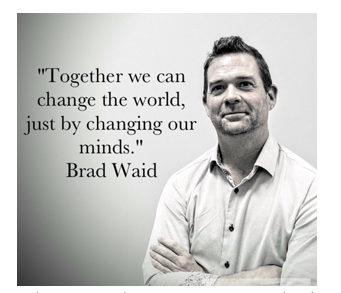
Brad Waid was the second key note speaker
“Engaging the globally connected student of today: A look at emerging technology, gaming and digital citizenship”
His presentation had me hooked for the entire hour..so much to think about.
He had so many quotes throughout this one in the photo has stood out.
The last key note speaker on the final morning was Dr Ann Milne. Her presentation got the crowd really thinking and she had a standing ovation at the end.
“Colouring in the white spaces: Cultural identity and community in whitestream schools”
I came back home buzzing after attending this conference...
I thank the CaWS project for making this happen and also Andrew and the Gilberthorpe School Board for allowing me this amazing opportunity to attend this national conference. I hope to be able to attend this again in 2018 and present our findings.
Sunday, 12 November 2017
IYT - Incredible Years Teacher Programme
Incredible Years Teacher Programme
This year long course has certainly been one of the
best PD opportunities that I have had this year. Through seven sessions of videos,
information, readings and group discussion with other teachers all in Junior
level classrooms I have learned so much and had many aha moments. The IY
programme is based on a pyramid and throughout the weeks we worked our way from
the bottom to the top, from strategies that should be used first and most at the
bottom, to the least used final steps at the top.

The six sections of the pyramid are broken
down into:
- - Building Positive Relationships
- - Being a Proactive Teacher
- - Giving Attention – Encouragement and Praise
- - Motivating through incentives
- - Decreasing inappropriate
behaviour
- - Negative consequences
It is hard to put into words all of the great things I learned this year so here are just some of them...
- Building strong relationships is the most important thing “a nurturing teacher-student relationship built on trust, understanding, and caring will foster students’ cooperation and motivation, and promote their learning, social and emotional development, and academic achievement at school” (Incredible Teachers, Carolyn Webster-Stratton, PH.D.) Building strong relationships doesn't take a lot of extra time. A simple 2 minute conversation every morning with a student can go a long way to strengthen a relationship. I found it very powerful with a few of my students to do some child-directed play during break times. They enjoyed being in charge and getting me to do whatever they wanted in their games.
- There are many skills that can be coached by a teacher: social, emotional, academic and persistence skills. Coaching academic skills can be done by simply naming the things that the students are doing while they work. Giving them the language (can be very beneficial for ESOL students) and is not demanding anything from the student, as questions would. Through social coaching you can label the skills they a showing and praise them at the same time e.g. I can see that (child) is sharing with (child), great job this way you both get a turn. Coaching persistence can give the child the encouragement they need to keep going e.g. I can see you are really focusing so well, even though it's getting tricking you are still working on those maths questions and now you're halfway!
- Social skills, emotions and solving problems are things that need to be explicitly taught so students can understand and learn how to self-regulate, learning how to calm themselves down, how to make friends and deal with others.
- Incentives can be a really powerful tool for a class (like fish tickets), for a group, or an individual. Working with a student and their family to come up with an individual incentive system and goals when necessary is so much more powerful than me just thinking about what they need to work on and what I could give. This gave more ownership to my students, who had already come up with the positive things they needed to do instead of the undesirable behaviour.
- "Ignoring muscles" are really important things for both you and your students to develop. They need to know why we are ignoring and be praised for it when they're doing a good job. Once a child has stopped the behaviour they then need to be re-engaged into the class/group. It was also really powerful for me to learn that it is important when a child is having a negative consequence (something taken off them etc.) to always focus on the first thing they did that caused it all and not act on any secondary behaviours. Ignoring the secondary behaviours that arise is a very important thing, because when you are ignoring it always gets worse before it gets better.
- Always focus on the positive! I was amazed with the way we saw teachers in the videos responding to so many different things in a positive way. Something that will stick with me was a video we saw of a teacher dealing with a tantrum. Just the way she could deal with something so frustrating, in such a positive manner amazed me.
- Natural vs. logical consequences - some consequences happen naturally without any intervention, e.g getting wet clothes when they go down the slide after being told not to. Whereas the logical consequences are those that are made by an adult to fit with what the student did.
Throughout
the year we also chose one student that we would learn to build a behaviour
plan for. I chose a child that was having difficulty regulating his emotions,
who often became quite angry without knowing how to direct or control this. The
behaviour plans had nine different steps, which we filled in as we learned
about the pertinent strategies.
- Step 1: Identify the negative
behaviour
- Step 2: Functional assessment
(identify some reasons why you think the behaviour may be occurring)
- Step 3: Positive Opposite
behaviour
- Step 4a: Relationship Building
Strategies
- Step 4b: Proactive strategies
- Step 5: Teacher Attention
Coaching and Praise
- Step 6: Motivating children through incentives
- Step 7: Decreasing inappropriate
behaviours… ignoring and redirecting and reengagement
- Step 8 Decreasing inappropriate
behaviour…following through with consequences
- Step 9: emotional regulation,
social skills and problem solving.
I started with building a stronger
relationship with him at the beginning of the year and then we worked together
to address the negative behaviours. He now has his own incentives chart, which
he is responsible for, with goals we decided on together (phrased as the
positive opposite that he is learning to be able to do e.g. I can choose a good learning spot)

I am now proud to be an Incredible Years
trained teacher, and I can definitely say that I have the confidence, skills
and knowledge to build a great classroom culture and to know what steps I can take when any issues arise.
Tuesday, 7 November 2017
Cluster Writing Moderation
Writing Moderation 2017

Our session started with introductions of our fellow cluster leaders of Literacy.
We then looked at one piece of writing and marked solo. As a group we discussed similarities and differences in our scores.
We then looked at samples of writing from across the cluster and worked together to determine scores using the e-asTTle Rubric. Scores were entered into a sheet which identified the marker from each school and the moderator's scores. When marks were different, we then looked a little deeper and had more input from lead teachers.
The rubric we use:

Two pairs discussing writing samples.

A lot of thought and discussion goes into this process.

Lead Teachers from Gilberthorpe with flash sign in stickers.
So how did we compare?
The charts below show the mark given by the teachers of our school (A), the moderator's score (B) and the difference between the two (C).

In the Junior Hub, marks given by teachers and the marks given from the cluster lead teacher moderators are very consistent with very little difference. One sample caused quite a it of discussion. Unfortunately scores were not added to the cluster sheet so we will add these later.

In the Senior Hub, three teachers marked the samples individually. For the moderation session, the middle score or most common was used. As a hub, we have some more discussions ahead as some of our scores varied and in some cases had a difference of three marks. We can now use the moderator scores and our initial thinking to make clearer and more consistent decisions around marking using the e-asTTle Rubrics.
I think it is really important to be aware of the inconsistencies in interpretation and marking of writing samples using these rubric. Below is a table showing scores given by two different moderators at the cluster moderating meeting. The variations in some marks given in sentence structure and punctuation in particular, show that the scores given by the lead teachers are not necessarily the correct score. These show we still have much discussion to do.

Tuesday, 26 September 2017
Designing and implementing Change ideas, with NoTosh
So, this hit my Facebook feed this morning. I duly saved it, along with the screeds of other "Saved Stories" that sit in limbo until time (Or holidays) afford them attention. A sick son intervened today, so I was able to afford it the attention it had been seeking... The immense productivity that can be achieved on a "sick day" is cause for far more in depth self assessment and a further blog post!
I have been a fan of NoTosh since having the pleasure of professioanl development around Design Thinking, as well as attending 2 ULearn Confernce Worshops around it in 2014. I really identify with the lens that they view education through.
This video has some great quotes along these lines:
"Education is about evolution. If you're not changing, what are you doing?"
Speed of Change:
The speed of change is often bandied about as an excuse to place a boulder in the water. I challenge that, when that overwhelming sensation begins to set in, when there is so much going on all at once... Perhaps we just need to take a step back. Change the lens that we are viewing through... Think of the changes we are implementing as "prototyping".
Some people are quick to adapt a mindset where they view the amount of changes taking place in education as "treating our åkonga like guinea pigs". We want our children to learn to test theories and make mistakes and then learn from them... Why are we afraid to do this as teachers. We are no longer the keeper of knowledge that we were, even just twenty years ago. We are no longer delivering education from the front and centre of the room.
This video prompted me towards a number of considerations, which are very topical at the moment. We have been in our new space just a few weeks, heading into the holidays. We have the luxury of a term where we can begin to set some key objectives for the term. We often set objectives for what we want the students to achieve... but why not what WE want to achieve, in terms of pedagogy and practise.
If you are making structural changes, you are making pedagogical changes.
- What are the "Pain Points"?
- If you are making structural changes, you are making pedagogical changes.
"If you're making structural changes, you're making pedagogical changes." Teaching in post quake Christchurch, has enabled a transformation of learning environments. The schools who have been fortunate enough to front-load the transition with developing the pedagogy have, I believe, been far more successful in implementing change. So many changes have taken place, all in one hit. Those who have been fortunate enough to view it with a "prototype" mindset, who have perhaps been more open to adapting to change, have been far more successful in the way structural change has occurred. There is some fantastic stuff going on down here, in little ol' Christchurch New Zealand. Flexible bell times; play first, eat last initiatives; modifications toward ILE or MLE or whatever we want to call it next week... Most of these schools are sharing their journey too!
Prototype Culture
Heading towards planning for Term 4, I prototype mindset makes logical sense as a lens for mapping out what needs to be covered: Curriculum coverage; AO's; Topic/strands etc... The ability to map out when this "might" happen in terms of timetable or term plan... Stressing the word "MIGHT"! By mapping things out... Prototyping, it gives clarity on what the outlook is, providing frameworks for all teachers to work within. We all need fences sometimes. Some who get intimidated by change or new thinking ideas etc, are made more comfortable by knowing the perimeters that they are working within... Some of us, probably need the framework to minimise the tangents and keep us on the same track as everyone else (Which probably helps everyones ability to cope with us and our foibles too!)
Incubator
"What do we want to change and let's change it."
Set key objectives for Term four.
- What do we want to achieve in terms of Teaching and Learning?
- Prototyping Teaching Approaches?
- Developing Student Voice?
- Assessment Capability?
- Shaking up the programme?
Subscribe to:
Posts (Atom)